
Evolution of Computers: Foundations of Modern Digital Systems
Introduction
The first computers marked the beginning of modern computing and fundamentally changed the way people worked, studied, and solved complex problems. Developed in the mid-20th century during a time of rapid technological advancement, these early machines laid the foundation for the digital systems and technologies used today.
Understanding how computers originated is an essential part of computer literacy. This topic explores the development of the first computers, the reasons they were created, and the impact they had on business, society, science, and technological progress.
The Evolution of Early Computers
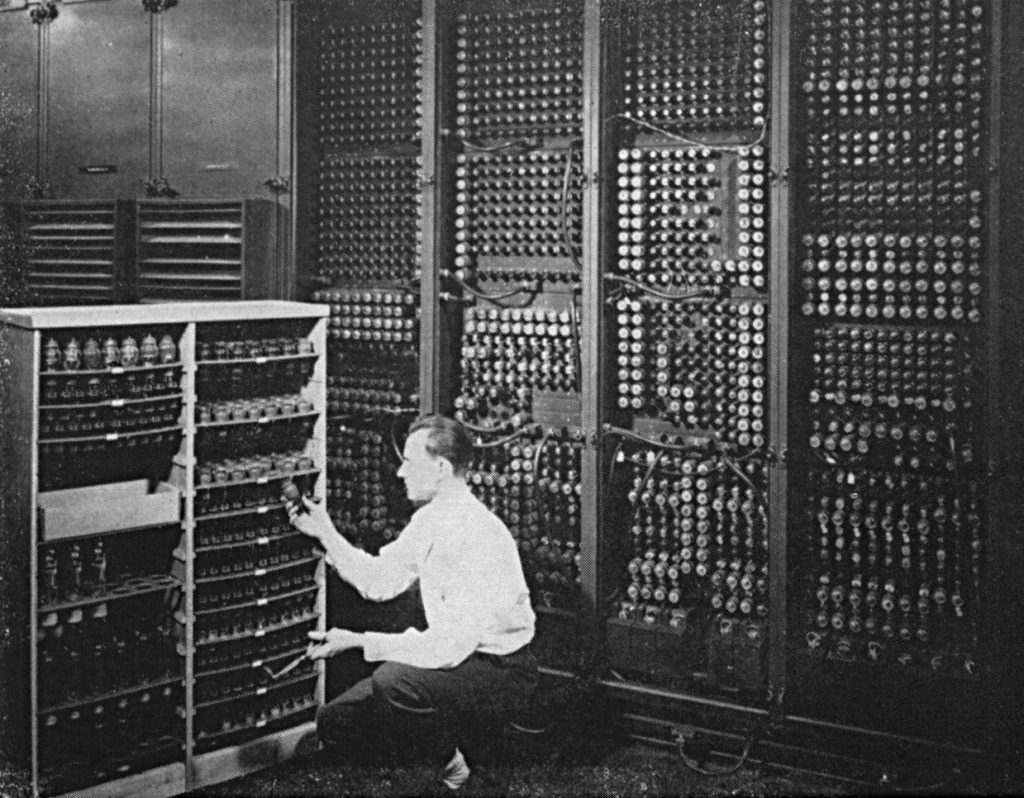
Early computers were large, complex machines designed to perform calculations far more quickly than humans could. Although limited when compared to modern computers, these systems introduced essential concepts such as electronic computation, data processing, and automation.
These early machines demonstrated how technology could improve accuracy and efficiency, influencing the design of future computer systems and shaping the development of modern digital infrastructure.
Business Automation
One of the earliest and most significant uses of computers was in business operations. Organisations began using computers to automate repetitive and time-consuming tasks such as payroll processing, inventory management, and accounting calculations.
By converting manual processes into digital systems, businesses improved efficiency, reduced human error, and gained the ability to manage large volumes of data. This shift marked the beginning of automated business systems that continue to support modern enterprises today.
Societal Changes
The introduction of computers brought major changes to society. Tasks that once took days or weeks to complete could now be performed more quickly and accurately. This improvement in efficiency helped pave the way for modern computer systems used in everyday life.
While early computers were not widely accessible or studied at first, interest gradually increased as people recognised their value. This led to greater demand for computer education and the development of digital skills across different sectors.
Military Applications
Computers also played a critical role in military operations, particularly during World War II and the Cold War. They were used to decipher coded messages, support cryptography, and assist in planning strategic operations.
These applications highlighted the ability of computers to process complex information quickly and securely, contributing to continued innovation in computing technology and information systems.
Scientific Advancement
In the scientific community, computers enabled researchers to process vast amounts of data with greater speed and accuracy. Fields such as biology, chemistry, and physics benefited from the ability to perform complex calculations in minutes rather than hours or days.
Computers contributed to advancements in medical research, digital weather forecasting, and nuclear physics. These developments were made possible through continued study and improvement of early computing machines and data-processing systems.
