
Types of Wounds and How to Treat Them
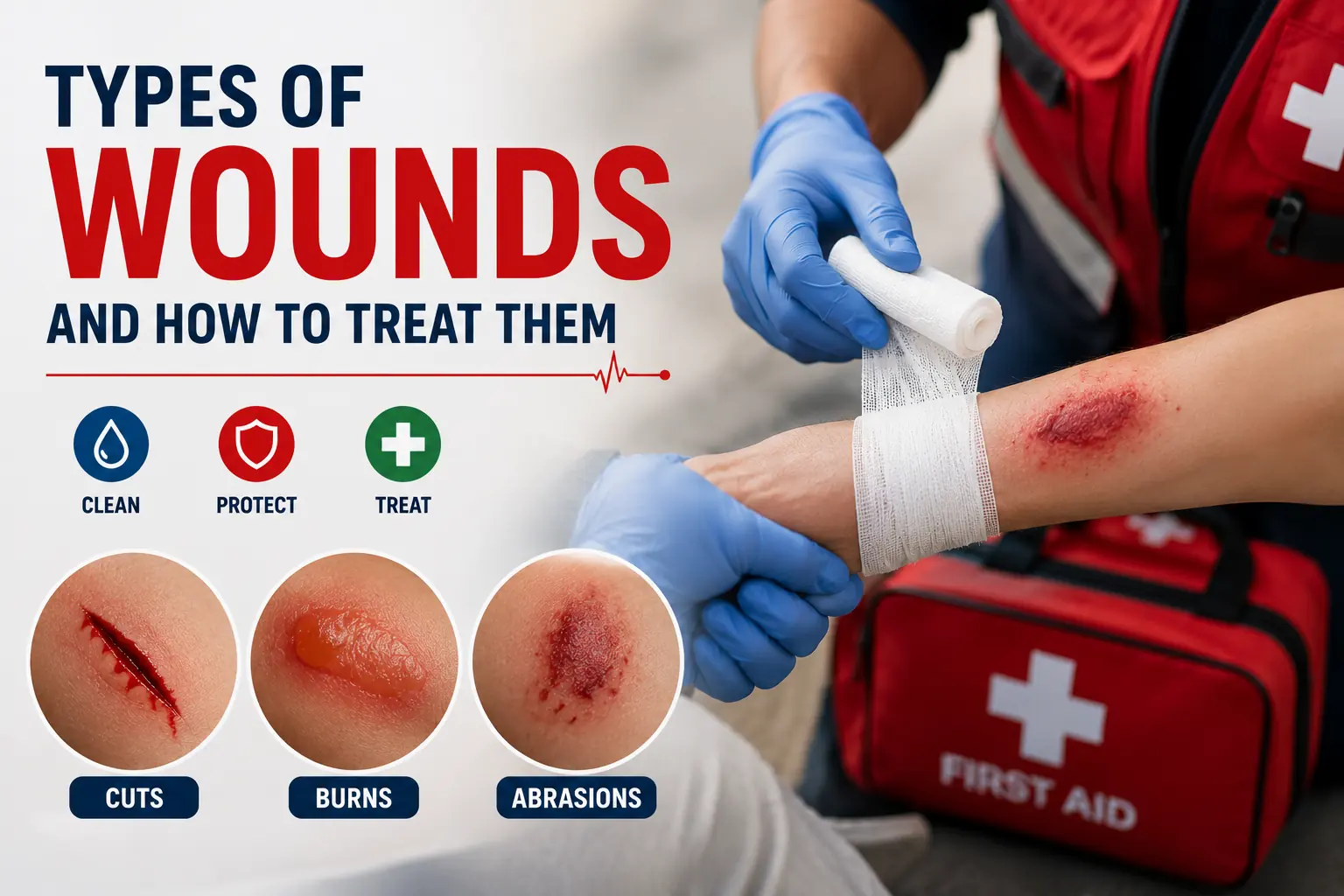
Common Types of Wounds and Basic Treatment Steps
Understanding the types of wounds and how to treat them helps you manage injuries safely. There are four main types of wounds: cuts, grazes, punctures, and burns.
Types of Wounds
- Cut (Laceration): A clean or jagged tear in the skin caused by sharp objects.
- Graze (Abrasion): The top layer of skin rubbed off, often from falling or scraping.
- Puncture: A small, deep hole made by nails, needles, or animal bites.
- Burn: Skin damage caused by heat, chemicals, or electricity.
To treat most wounds, start by washing your hands to avoid infection. For cuts and grazes, gently clean the wound with clean water to remove dirt. Avoid using harsh chemicals like hydrogen peroxide, as they can damage tissue.
Apply a sterile dressing or clean cloth to stop bleeding. Keep the wound covered to protect it from dirt and germs. Change dressings daily or when wet or dirty. If a cut is deep, bleeding heavily, or won’t stop bleeding, seek medical help quickly.
Puncture wounds can be dangerous because they trap bacteria inside. Clean the area well and get a tetanus booster if you haven’t had one in the past 5 years. Animal bites require urgent medical attention to prevent infection.
For burns, cool the affected area with clean, cool (not cold) water for 10 to 20 minutes. Do not apply creams or oils. Cover the burn with a sterile, non-stick dressing. Seek medical help for serious burns or burns that cover large areas of the body.
Knowing these types of wounds and how to treat them helps prevent infection and speeds up healing. Always watch for signs of infection, like increasing redness, warmth, swelling, or pus, and get medical help if needed.
Live Scenario • Active Situation
You are a factory floor supervisor responding to an injured co-worker who just fell on uneven concrete, scraping their forearm and bleeding.
There is no single perfect answer. Choose what you would do in this situation.
