
How to Identify Fractures and Sprains
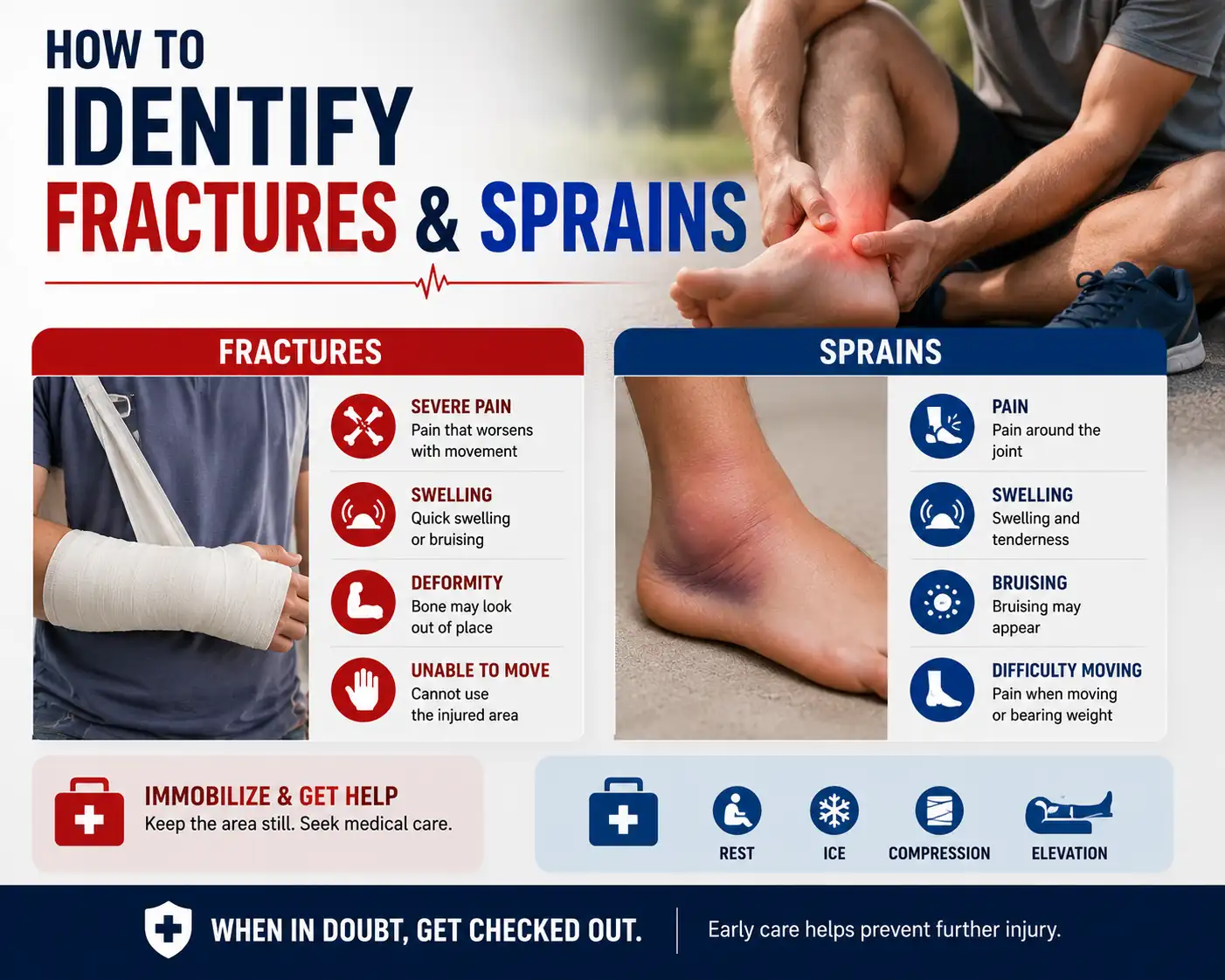
Recognising Common Signs of Bone and Joint Injuries
How to identify fractures and sprains is important for giving the right first aid quickly. Both injuries affect the bones and soft tissues but show different signs.
A fracture happens when a bone breaks or cracks. Signs of a fracture include intense pain at the injury site, swelling, bruising, and sometimes a visible deformity. The injured area may look out of place or bent oddly. The person might not be able to move the limb normally or put weight on it.
A sprain is damage to the ligaments around a joint caused by stretching or twisting. Symptoms of a sprain are pain around the joint, swelling, bruising, and limited movement. Unlike fractures, sprains usually don’t cause a bent or broken bone shape.
Key Differences to Look For
- Fracture: Severe pain, swelling, deformity, and inability to use the limb properly.
- Sprain: Pain and swelling near a joint, bruising, and difficulty moving but no broken bone shape.
- Both may have tenderness and discomfort.
- Fractures often make movement impossible or very painful.
When helping someone injured, check for these signs carefully. Avoid moving the limb if a fracture is suspected. Always seek medical help immediately for fractures. For sprains, rest, ice, and elevation can help, but medical advice is still important.
Live Scenario • Active Situation
You are a warehouse supervisor checking safety after a worker fell from a low platform.
There is no single perfect answer. Choose what you would do in this situation.
