
Dressing and Bandaging Techniques
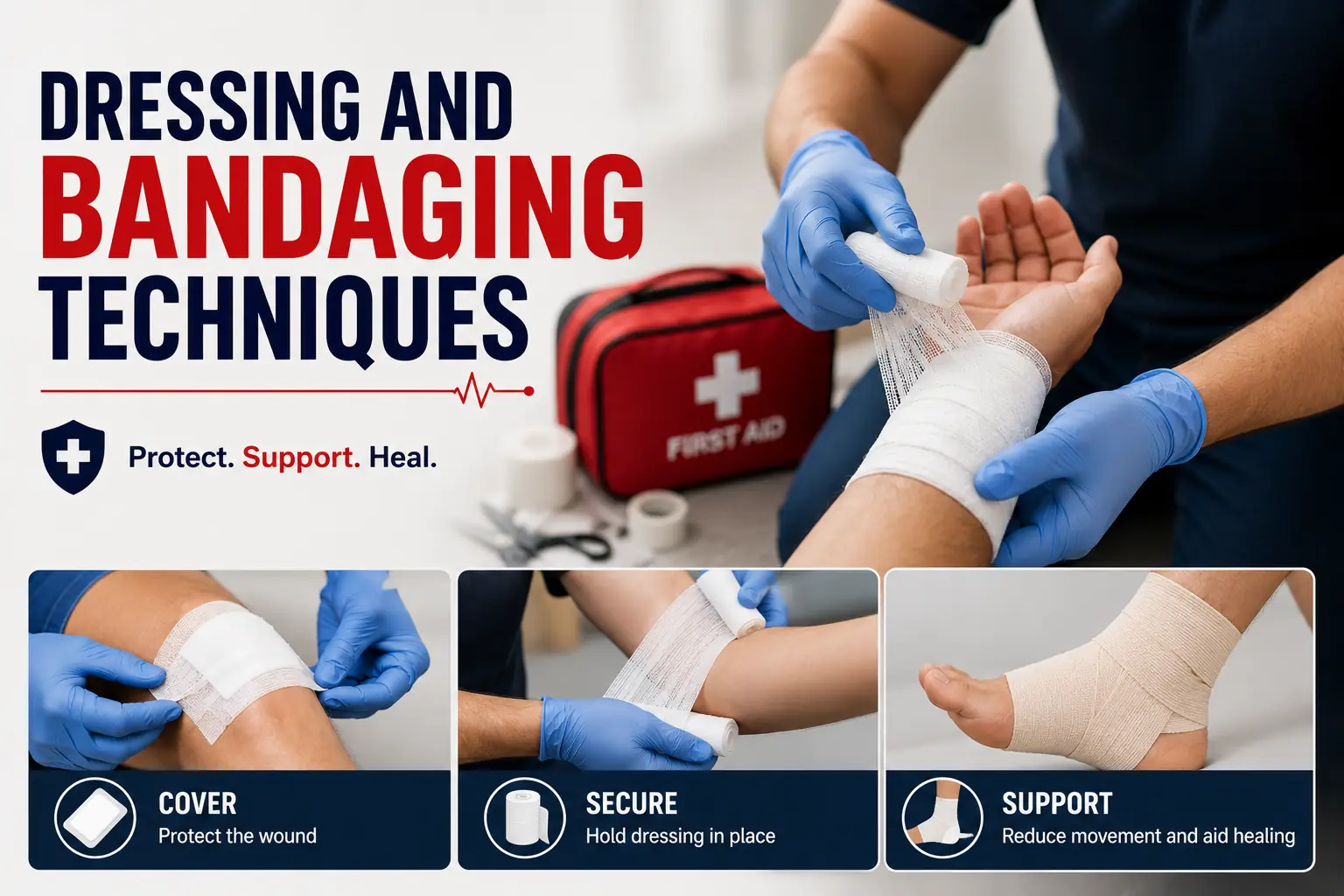
How to Apply Dressings and Bandages Correctly
Dressing and bandaging techniques are key skills in first aid for treating wounds and controlling bleeding quickly and safely. A dressing covers the wound to keep it clean and stop bleeding. A bandage holds the dressing in place and can support injured parts.
First, wash your hands if possible or use gloves. Then, gently clean the wound with clean water to remove dirt. Avoid touching the wound directly to prevent infection.
Steps for Applying a Dressing and Bandage
- Choose a sterile dressing that fully covers the wound.
- Place the dressing gently on the wound without pressing too hard.
- Wrap a bandage around the dressing to hold it firmly in place. Avoid wrapping too tight as it can block blood flow.
- If bleeding is heavy, press down firmly on the dressing while bandaging.
- Secure the bandage with tape or clips.
- Check that the fingers or toes beyond the bandage are warm and can move easily.
Use triangular bandages for large injuries or arm slings. For smaller wounds, adhesive dressings work well. Change the dressing regularly or if it becomes wet or dirty.
Proper dressing and bandaging protects wounds, helps stop bleeding, and lowers infection risk. Always seek medical help if bleeding does not stop or the injury is serious.
Live Scenario • Active Situation
You are a factory floor supervisor providing first aid to a worker with a bleeding arm injury.
There is no single perfect answer. Choose what you would do in this situation.
