
Recognising Allergic Reactions and Anaphylaxis
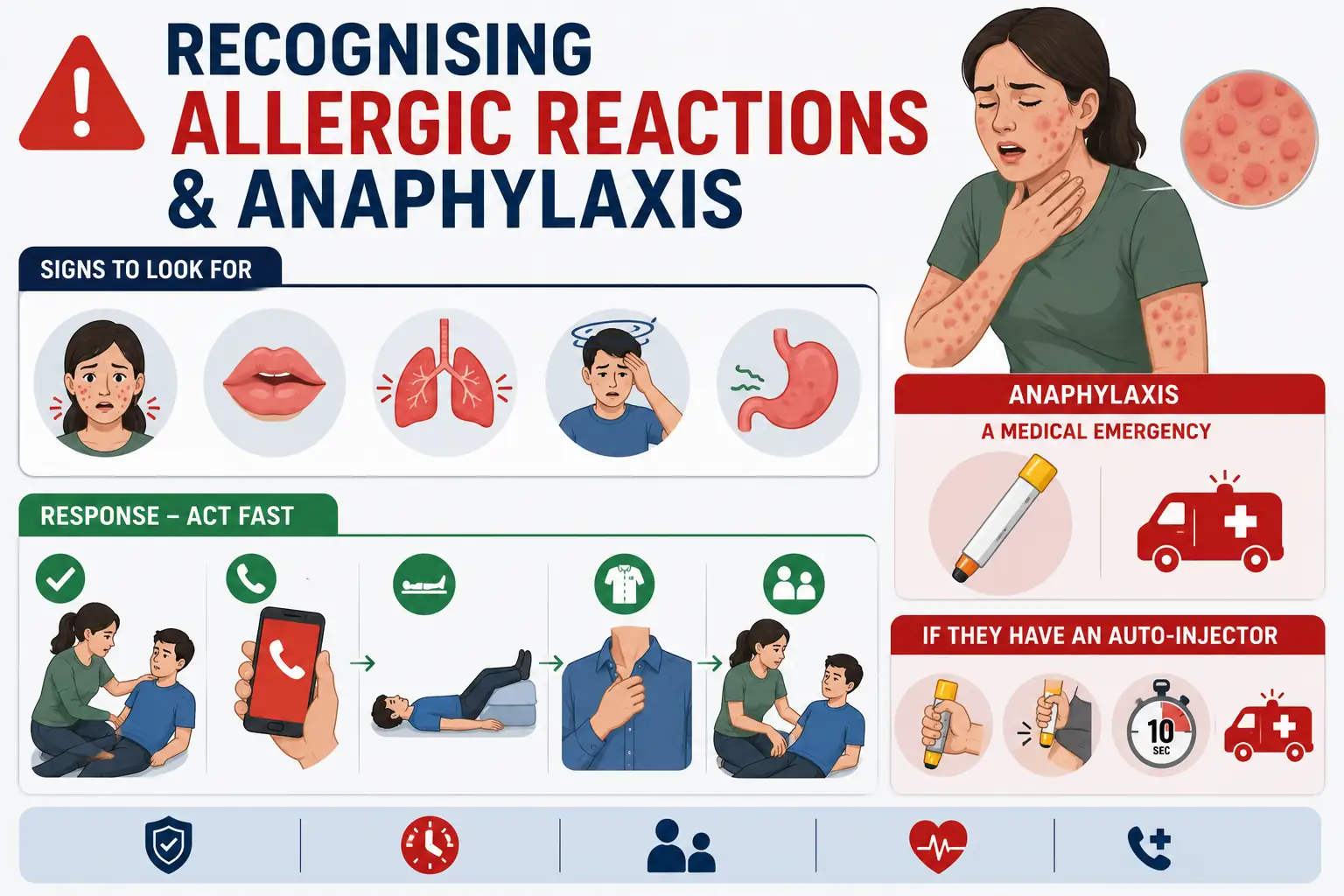
How to Identify Allergic Reactions and Anaphylaxis Quickly
Recognising allergic reactions and anaphylaxis is important for providing fast first aid. An allergic reaction happens when the body overreacts to a substance like food, insect stings, or medicine. Symptoms can range from mild to very serious.
Mild allergic reactions often include itching, skin rash, or hives. The person may also sneeze, have a runny nose, or watery eyes. These signs usually appear soon after contact with the allergen and can be uncomfortable but not life-threatening.
Anaphylaxis is a severe allergic reaction that can be very dangerous. It happens quickly and affects the whole body. You must act fast when you see these signs because the person’s airway can swell, making it hard to breathe.
Common Signs of Anaphylaxis
- Difficulty breathing or wheezing
- Swelling of the face, lips, tongue, or throat
- Rapid or weak pulse
- Severe skin rash or hives spreading quickly
- Dizziness, confusion, or loss of consciousness
- Sudden stomach cramps, nausea, or vomiting
Knowing how to spot allergic reactions and anaphylaxis is key to saving a person’s life. If you suspect anaphylaxis, call emergency services immediately. If the person has an adrenaline auto-injector (EpiPen), help them use it right away. Keep the person calm, lying down with their legs raised, and watch their breathing until help arrives.
In summary, quick recognition and early action can prevent serious harm. Always treat rapid symptoms as a medical emergency. Learning these signs forms an essential part of first aid training for medical emergencies and conditions.
Live Scenario • Active Situation
You are a warehouse supervisor.
There is no single perfect answer. Choose what you would do in this situation.
