
Communicating During Emergencies
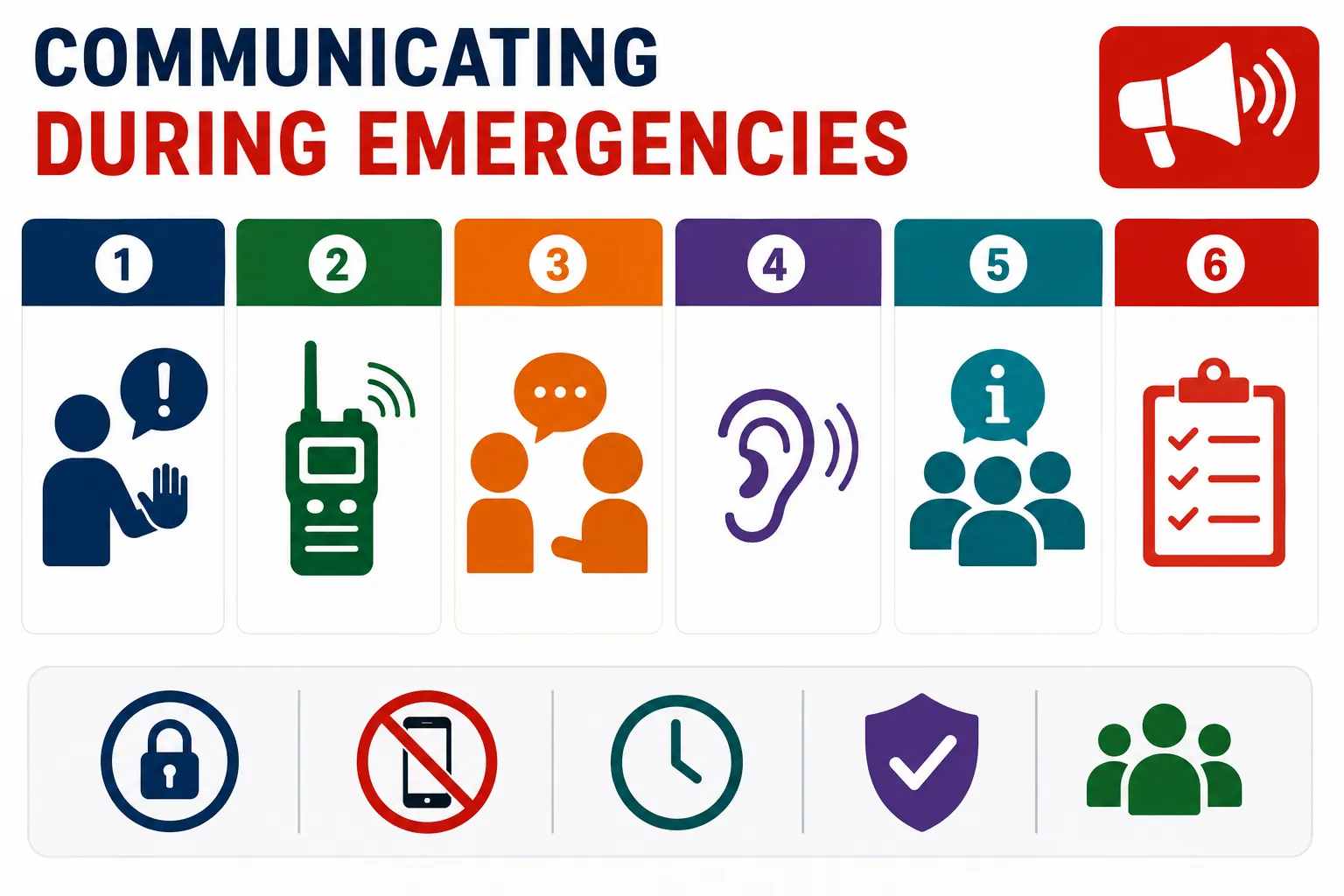
How to Communicate Effectively in Emergencies
Communicating during emergencies is important to get help quickly and keep everyone safe. When an accident or sudden illness happens, clear communication can save lives. You need to stay calm and give accurate information to emergency responders or bystanders.
First, make sure you are safe before calling for help. If you are safe, call the emergency number for your area, like 10177 for South African Police or 112 for general emergencies. If you have a cellphone, use it to call or send a message.
What to Say When Reporting an Emergency
- State your exact location or address clearly.
- Describe what happened in short, clear words.
- Tell how many people are injured or need help.
- Explain any dangers at the scene.
- Stay on the line until the operator says you can hang up.
If you are helping someone, do not leave them alone unless you need to get help. Use simple words and speak slowly. Do not make false calls or give wrong information. This wastes time and could put more people at risk.
When communicating with other helpers or bystanders, give clear instructions. For example, tell someone to call an ambulance while you start first aid. Always remain calm to help people feel safer.
In summary, good communication during emergencies helps get faster, better support. Knowing what to say and how to say it can make a big difference in saving lives and preventing further harm.
Live Scenario • Active Situation
You are a factory floor supervisor
There is no single perfect answer. Choose what you would do in this situation.
