
Managing Seizures and Diabetic Emergencies
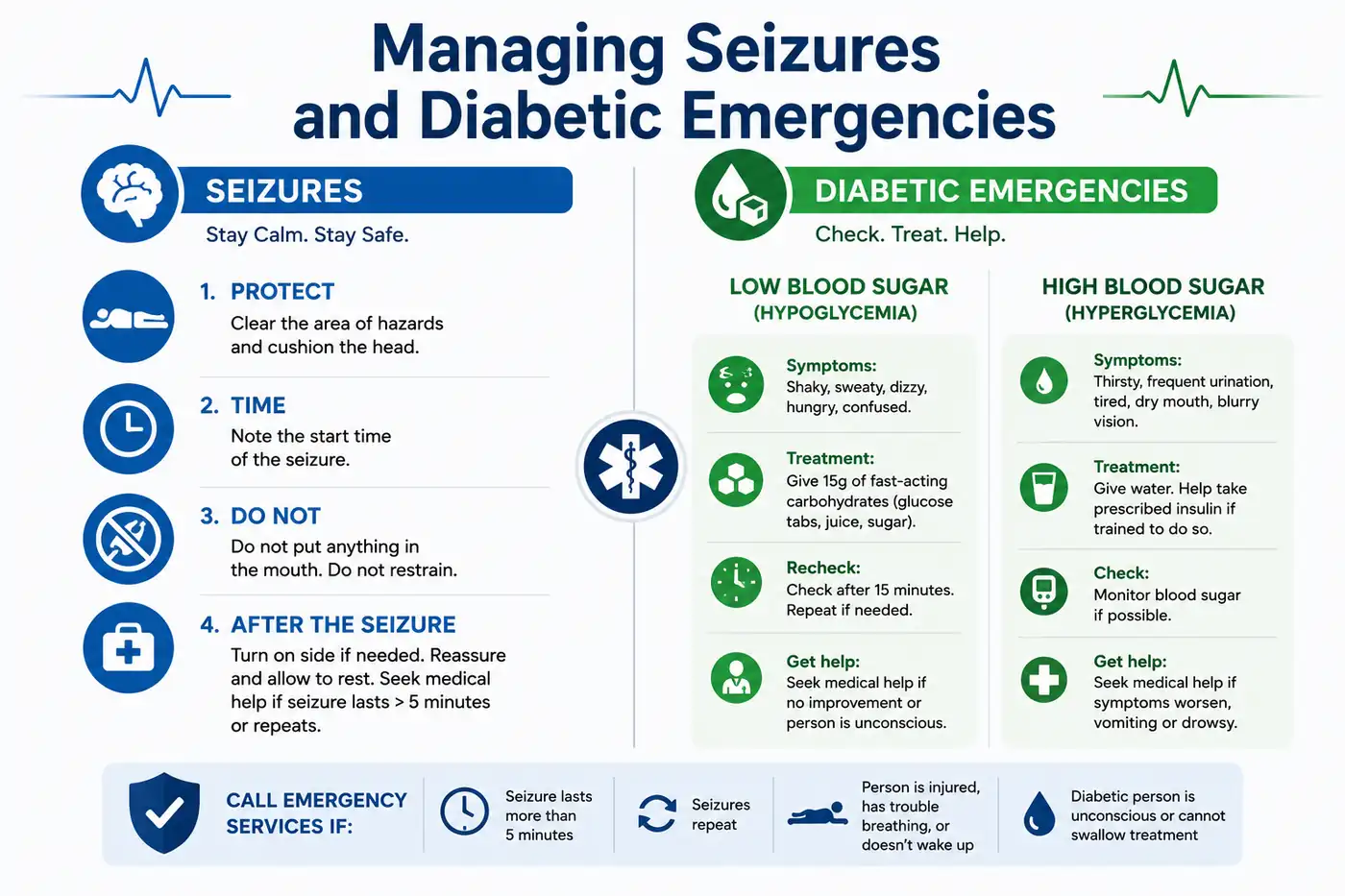
Quick Guide to Managing Seizures and Diabetic Emergencies
Managing seizures and diabetic emergencies requires calm and quick action to keep the person safe. Seizures happen when brain activity is disturbed, causing uncontrolled movements or loss of consciousness. Diabetic emergencies occur when blood sugar is too high (hyperglycaemia) or too low (hypoglycaemia).
What to do during a seizure
- Stay calm and time the seizure.
- Protect the person from injury by moving dangerous objects away.
- Do not hold the person down or put anything in their mouth.
- Turn them onto their side to keep their airway clear.
- Stay with them until they recover and are fully alert.
- Call emergency services if the seizure lasts longer than 5 minutes or if it is their first seizure.
Recognising a diabetic emergency
Look for signs like sweating, shaking, confusion, dizziness, or unconsciousness. These might mean low blood sugar. High blood sugar symptoms include extreme thirst, frequent urination, nausea, or breath that smells fruity.
How to help
- If the person is conscious and can swallow, give them sugary drinks or sweets for low blood sugar.
- If unconscious, do not give food or drink; call for emergency help immediately.
- For high blood sugar, encourage them to get medical help quickly.
Knowing these steps for managing seizures and diabetic emergencies can save lives. Always stay calm, protect the person, and get medical help when needed.
Live Scenario • Active Situation
You are a factory floor supervisor in a busy manufacturing plant.
There is no single perfect answer. Choose what you would do in this situation.
