
Immobilisation and Support Techniques
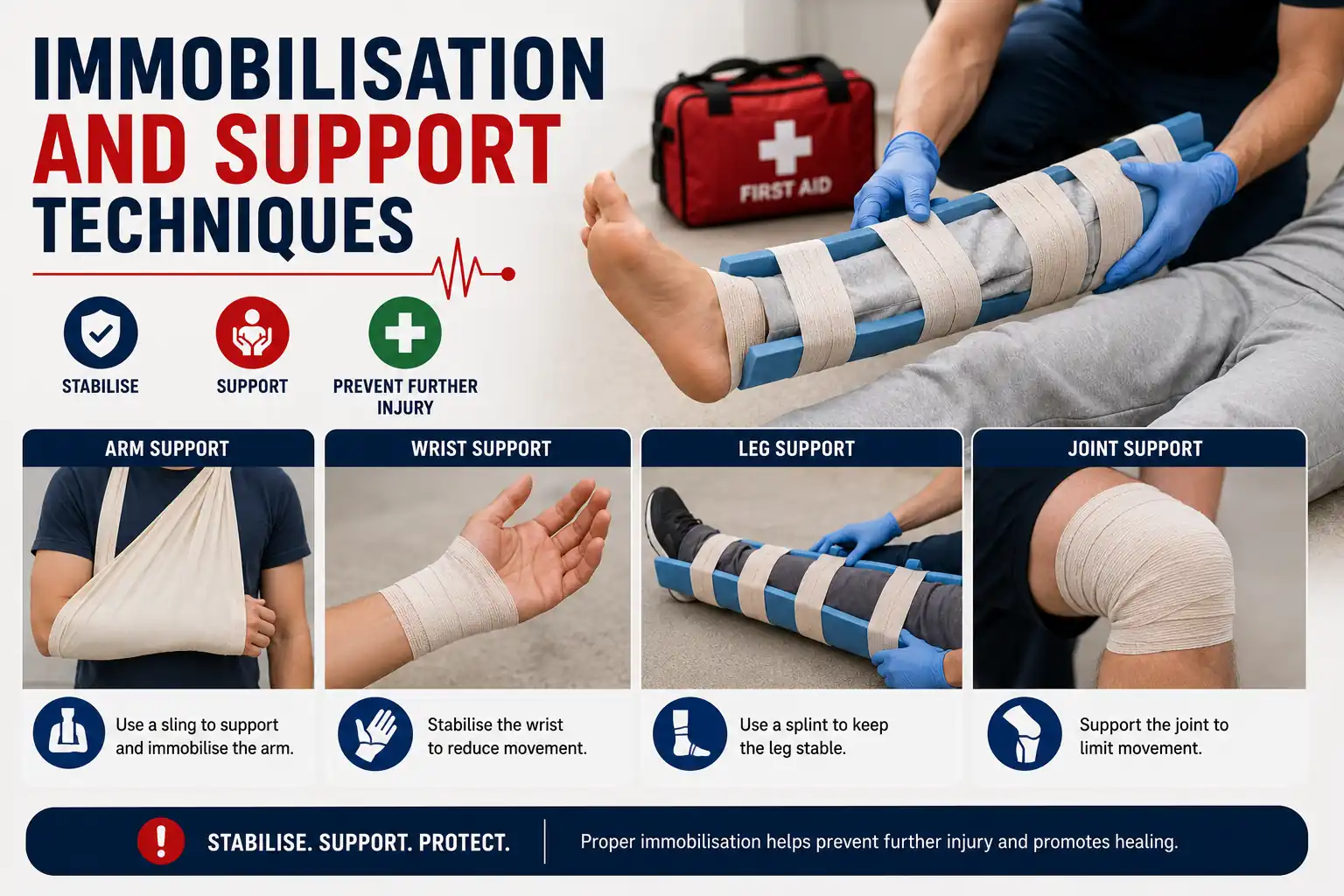
How to Use Immobilisation and Support Techniques Safely
Immobilisation and support techniques are essential skills in first aid for treating fractures, sprains, and other injuries. These methods help prevent further damage by keeping the injured part still and supported until professional help arrives.
When dealing with fractures or severe sprains, the first step is to avoid moving the injured limb unnecessarily. Moving it can cause more pain and injury. Use a splint or any rigid object like a stick or rolled-up newspaper to keep the limb straight.
Steps for Effective Immobilisation and Support Techniques
- Check for bleeding or open wounds and stop any bleeding if present.
- Gently support the injured limb in the position you found it.
- Place padding between the splint and the skin to protect the limb.
- Secure the splint using bandages, strips of cloth, or tape above and below the injury site.
- Ensure the splint is firm but not too tight to avoid cutting off blood circulation.
- If a limb is injured, support it with a sling to reduce pain and swelling.
- Keep the person calm and still until they can get medical help.
Remember to check for signs of poor circulation like numbness, coldness, or color changes in the fingers or toes. If you notice these, loosen the bandages slightly.
Immobilising a broken bone or sprained joint properly reduces pain and prevents complications. Always prioritize safety and seek medical help as soon as possible.
Live Scenario • Active Situation
You are a warehouse worker who spots a colleague with a badly twisted ankle after a fall.
There is no single perfect answer. Choose what you would do in this situation.
