
What is Malware? Types and Examples
Track Your Course Progress
You are currently studying as a guest. Your course progress and quiz results will not be saved unless you login to your EduCourse account. Login to track your progress and qualify for your certificate.
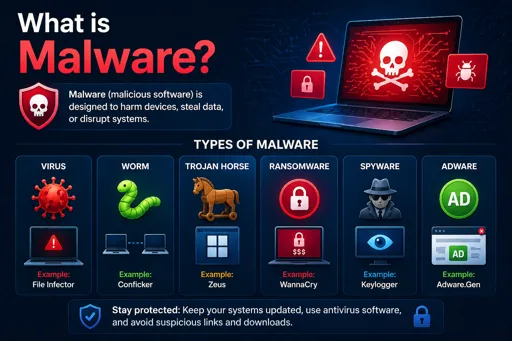
Understanding Malware and Its Common Forms
What is Malware? Types and Examples help learners identify harmful software that threatens computer security. Malware is any software designed to damage, disrupt, or gain unauthorised access to a device. It hides in downloads, links, or emails and can steal information or harm your system.
Here are the main types of malware you should know:
- Virus: Attaches itself to files and spreads when you open them. Example: ILOVEYOU virus.
- Worm: Spreads automatically across networks without needing a host file. Example: Conficker worm.
- Trojan Horse: Looks like a normal program but gives attackers access. Example: Zeus Trojan.
- Ransomware: Locks your files and demands money to unlock them. Example: WannaCry.
- Spyware: Secretly records your activities and sends info to hackers. Example: Keyloggers.
- Adware: Shows unwanted ads and can track your browsing. Example: Fireball adware.
- Rootkit: Hides malware deep in your system to avoid detection. Example: Sony BMG Rootkit.
Protect yourself by updating software, not clicking suspicious links, and using antivirus programs. Knowing what malware is, its types, and examples helps you stay safe online and keep your personal data secure.
