
Safe Email Practices for Personal and Work Use
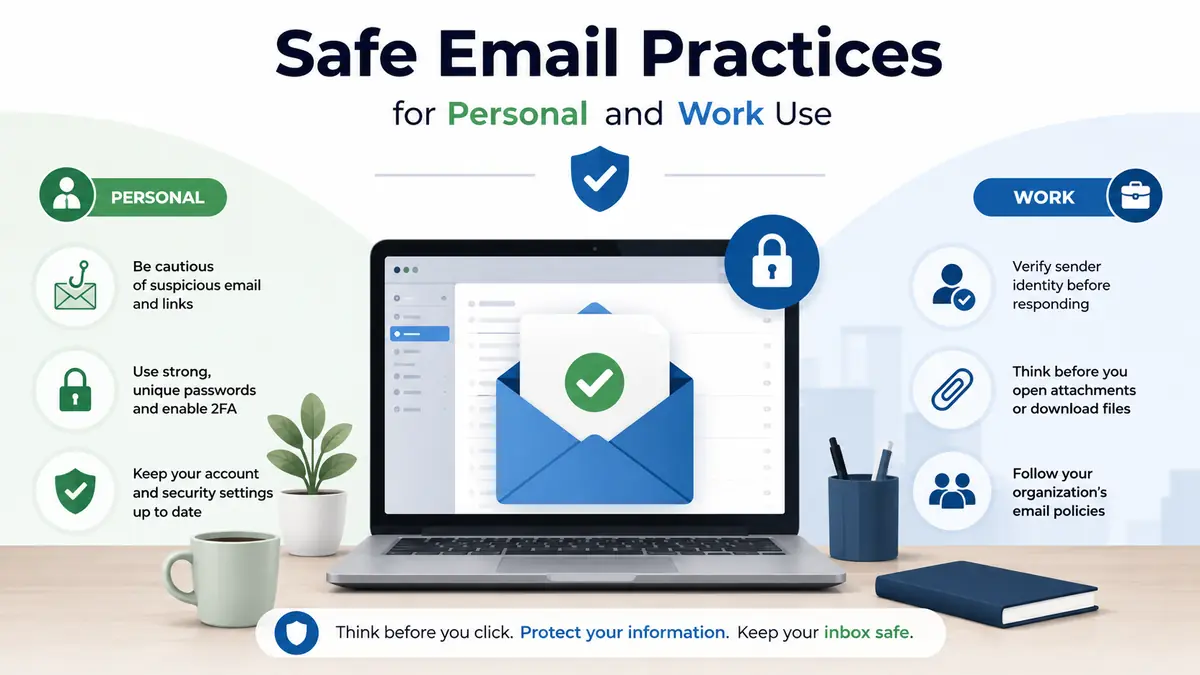
How to Protect Yourself Using Safe Email Practices
Safe Email Practices for Personal and Work Use are important to keep your information secure. Email is a main way people share messages, but it can also be a way hackers try to steal data or spread viruses. Knowing how to use email safely helps you avoid these risks.
First, always check the sender’s email address carefully. Phishing emails often look real but come from fake addresses. Never click on links or open attachments from unknown senders.
Use strong, different passwords for your email accounts. Change your passwords regularly and avoid using easy words like “password” or your birthday. Turn on two-factor authentication if your provider offers it. This adds extra security by asking for a code sent to your phone.
Key Safe Email Practices
- Always verify the sender before replying or clicking links.
- Avoid sharing personal or work information via email unless sure it’s secure.
- Keep your email software and device antivirus up to date.
- Report suspicious emails to your IT department or email provider.
- Never give out your email password to anyone.
By following these steps daily, you protect your personal data and work info from hackers and scams. Safe Email Practices for Personal and Work Use help create a strong first line of defence against cyber threats.
