
Common Social Media Scams and How to Avoid Them
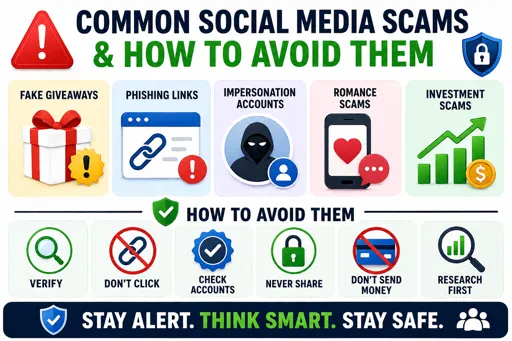
Recognise and Stay Safe from Social Media Scams
Common social media scams and how to avoid them are important to know for anyone using platforms like Facebook, WhatsApp, Instagram, or Twitter. Scammers use these networks to trick people into giving away personal information or money. Knowing the scams helps you protect yourself and your friends.
One popular scam is the fake prize or giveaway. Scammers post messages saying you’ve won money or a prize, but to claim it, you must share personal details or pay a small fee. Always check the official page or website before trusting such offers. If it sounds too good to be true, it usually is.
Other common scams include:
- Phishing links: Scammers send messages with links that look real but lead to fake login pages to steal passwords.
- Friend impersonation: Someone pretends to be a friend in trouble and asks for money urgently.
- Fake job offers: Promises of high-paying jobs that require you to pay upfront or share bank details.
- Romance scams: Scammers develop fake relationships to get money or gifts.
To avoid these scams, never click on suspicious links or share your password. Always check who you are talking to and confirm with friends if you get strange requests. Use strong passwords and enable two-factor authentication for extra security. Report any scam accounts or messages to the social media site.
Being cautious on social media keeps your information safe and stops scammers from taking advantage of you.
