
Personal protective equipment (PPE) use
How to Use Personal Protective Equipment (PPE) in Food Production
Personal protective equipment (PPE) use is essential for keeping food production workers safe and hygienic on the job. PPE helps protect you from hazards like chemicals, sharp tools, hot surfaces, and contamination. It also helps prevent food from being contaminated, ensuring the food you make is safe to eat.
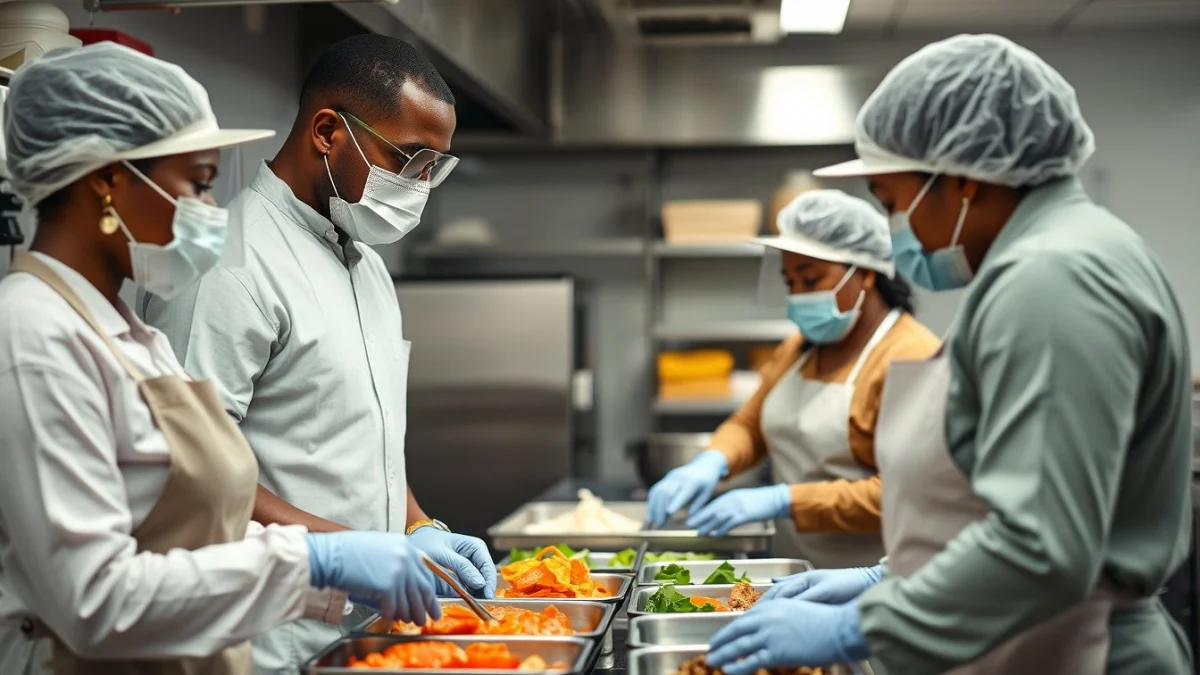
In food production, common PPE includes gloves, aprons, hairnets, masks, and safety shoes. Each item has a specific purpose and must be used correctly to work well.
Types of PPE and Their Uses
- Gloves: Protect your hands from chemicals, dirt, and germs. Always wear clean gloves when handling food and change them regularly to avoid cross-contamination.
- Aprons: Keep your clothes clean and prevent germs from your clothes getting into the food. Use waterproof aprons when working with liquids or wet ingredients.
- Hairnets and Caps: Stop hair from falling into food. Always cover all hair and beards fully to maintain hygiene.
- Masks: Prevent breathing droplets or saliva from contaminating food. Wear masks especially when working in close spaces or with ready-to-eat foods.
- Safety Shoes: Protect your feet from sharp objects, spills, and heavy items. Shoes should be closed-toe, non-slip, and easy to clean.
Before starting work, check your PPE to make sure it is clean and free of damage. Dirty or torn PPE can cause contamination or fail to protect you.
Remember to put on PPE before entering food processing areas. Remove it carefully after work or when taking breaks to avoid spreading contamination. Always wash your hands before putting on gloves and after removing PPE.
Proper use of PPE helps prevent accidents and keeps the workplace safe. It also guarantees food is handled safely, meeting hygiene standards required in South Africa.
Always follow your workplace rules for PPE use. If you are unsure about the correct PPE for a task, ask your supervisor. PPE works best when used together with good personal hygiene and safe work practices.
In summary, personal protective equipment (PPE) use protects both workers and food. Wear clean, appropriate PPE properly every time you work in food production to stay safe and keep food safe.
Live Scenario • Active Situation
You are a Food Production Assistant in a busy food processing plant.
There is no single perfect answer. Choose what you would do in this situation.
