
Types of PPE Used in Manufacturing Environments
Essential Personal Protective Equipment in Manufacturing
Types of PPE used in manufacturing environments are important for keeping workers safe from hazards. Manufacturing involves many risks like sharp tools, loud noise, chemicals, and heavy machines. PPE reduces the chance of injury and protects workers while they do their jobs.
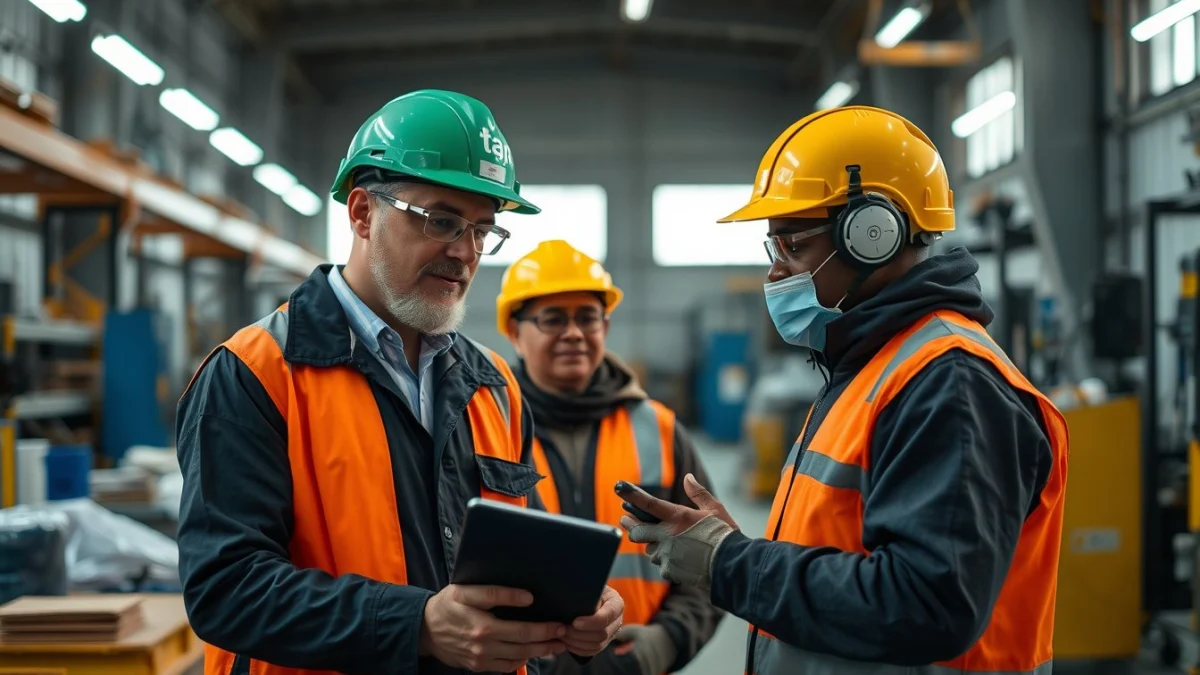
Here are the common types of PPE used in manufacturing environments:
- Safety helmets: Protect the head from falling objects and bumps. They are essential where there is a risk of head injury.
- Eye protection: Includes safety goggles and face shields. These guard against flying particles, dust, sparks, and chemical splashes.
- Hearing protection: Earplugs or earmuffs reduce loud noise levels that can cause permanent hearing loss.
- Respiratory protection: Masks and respirators filter dust, fumes, and harmful vapours to protect the lungs.
- Hand protection: Gloves protect hands from cuts, burns, chemicals, and sharp objects. Different materials are used depending on the hazard.
- Protective clothing: Includes overalls, aprons, and flame-resistant clothing that shield the body from chemicals, heat, and dirt.
- Foot protection: Safety boots with steel toes and slip-resistant soles protect feet from heavy objects and slippery floors.
- Fall protection equipment: Harnesses and lifelines are used when working at heights to prevent falls.
Choosing the Right PPE
The choice of PPE depends on the specific hazards present in the work area. Employers must assess risks and provide suitable PPE for their workers. Workers should be trained on how to use and maintain their PPE correctly.
Regular inspections and proper storage of PPE are important to keep it effective. Using the correct PPE in manufacturing environments helps prevent injuries and ensures a safer workplace.
Live Scenario • Active Situation
You are a machine operator in a busy manufacturing plant.
There is no single perfect answer. Choose what you would do in this situation.
