
Personal Google accounts vs Workspace accounts
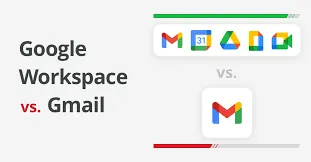
A personal Google account and a Google Workspace account may look similar on the surface, but they are designed for very different purposes. Understanding this difference is important before moving on to features, control, or business use. At its most basic level, the distinction lies in intent: personal Google accounts are created for individual, everyday use, while Google Workspace accounts are created for structured, professional, or educational environments.
A personal Google account is created by an individual for personal activities. It is commonly used for private email communication, storing personal photos and files, watching videos, using mobile apps, and managing personal documents. The account exists independently of any organisation, meaning it is not linked to a company, school, or institution. The user signs up on their own, agrees to Google’s standard terms, and uses the account primarily for personal life activities.
A Google Workspace account, by contrast, exists within a managed environment. It is created as part of Google Workspace, which is designed to support structured work, learning, and collaboration. These accounts are usually issued by an organisation such as a business, school, or nonprofit and are intended specifically for work-related or academic tasks rather than personal use. Even though the tools may look familiar, the account itself is part of a broader system rather than a standalone personal profile.
Another important distinction is how identity is presented. Personal Google accounts typically use a general Gmail address, which reflects personal ownership and informal use. Workspace accounts are tied to an organisation’s digital identity and are meant to represent a role within that organisation rather than a private individual. This difference helps separate personal digital life from professional or academic responsibilities, which is especially important in structured environments.
From a usage perspective, personal Google accounts are flexible and informal. Users decide how and when to use them, and there is no expectation of standardised behaviour, shared structure, or organisational oversight. Workspace accounts, however, exist within a shared environment where users are expected to follow certain guidelines related to communication, file usage, and collaboration. This distinction sets the foundation for understanding why Workspace accounts are used in professional settings rather than relying on personal accounts.
It is also important to understand that these two account types are not meant to replace one another. A person can have both a personal Google account and a Google Workspace account at the same time, each serving a different role. One is used for personal communication and private data, while the other is used for structured work or learning activities. Keeping these roles separate helps maintain clarity, professionalism, and data organisation.
In summary, the difference between personal Google accounts and Google Workspace accounts lies mainly in purpose and context. Personal accounts are designed for individual, everyday use and personal digital life. Google Workspace accounts are designed for organised, shared environments where collaboration, structure, and consistency are required. Understanding this foundational difference prepares learners to explore how features, control, and real-world usage differ between the two—topics that will be covered next in this lesson.
