
Workbooks in Excel
Excel files are called workbooks. Whenever you start a new project in Excel, you’ll need to create a new workbook. You can choose to create a new workbook—either with a blank workbook or a predesigned template—or open an existing workbook.
To create a new blank workbook:
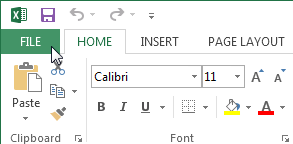
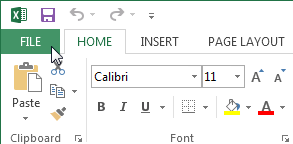
- Select the File tab. Backstage view will appear.
- Select New, then click Blank workbook.
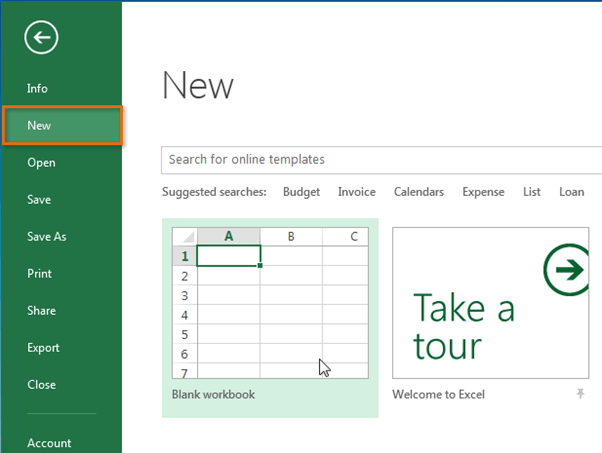
- A new blank workbook will appear.
To open an existing workbook:
In addition to creating new workbooks, you’ll often need to open a workbook that was previously saved.
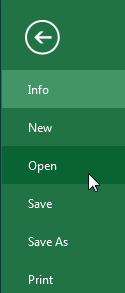
- Navigate to Backstage view, then click Open.
- Select Computer, then click Browse.
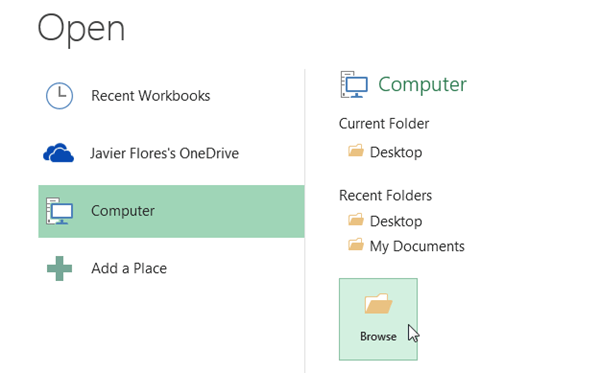
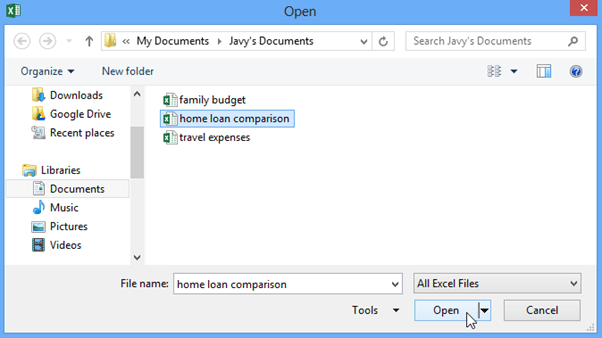
- The Open dialog box will appear. Locate and select your workbook, then click Open.
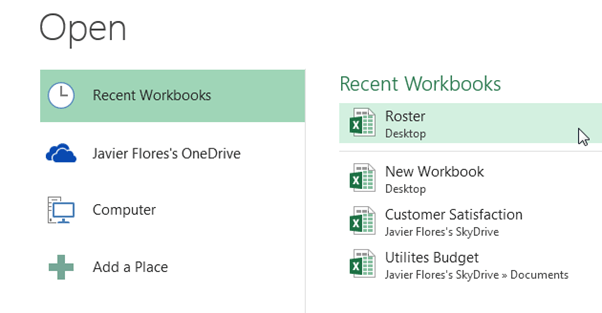
If you’ve opened the desired workbook recently, you can browse your Recent Workbooks rather than search for the file.
Using templates
A template is a predesigned spreadsheet you can use to create a new workbook quickly. Templates often include custom formatting and predefined formulas, so they can save you a lot of time and effort when starting a new project.
To create a new workbook from a template:
- Click the File tab to access Backstage view.
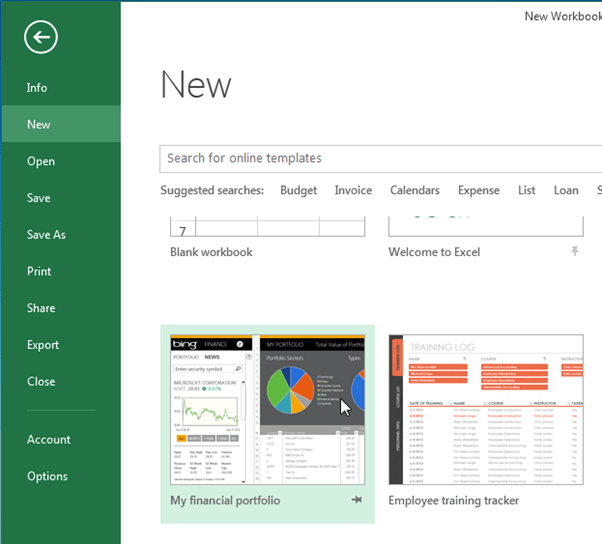
- Select New. Several templates will appear below the Blank workbook option.
- Select a template to review it.
- A preview of the template will appear, along with additional information on how the template can be used.
- Click Create to use the selected template.
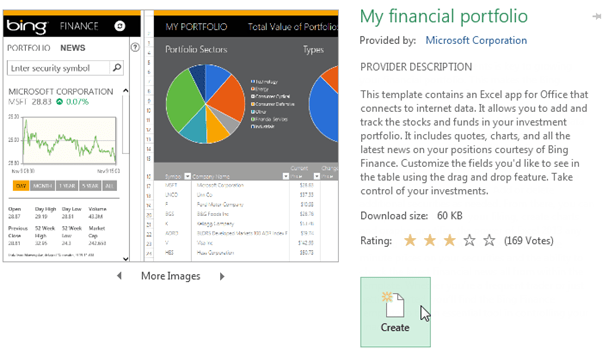
- A new workbook will appear with the selected template.
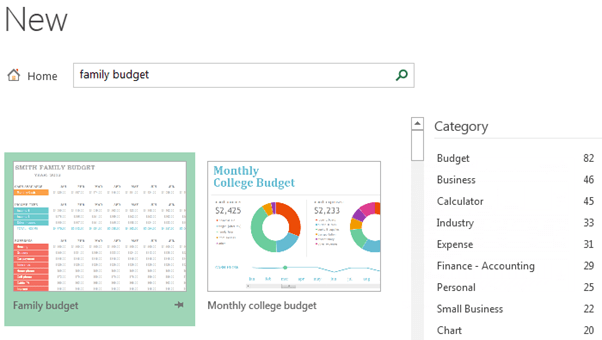
You can also browse templates by category or use the search bar to find something more specific.
Saving and Sharing Workbooks
Introduction
Whenever you create a new workbook in Excel, you’ll need to know how to save it in order to access and edit it later. As with previous versions of Excel, you can save files locally to your computer. But unlike older versions, Excel 2016 also lets you save a workbook to the cloud using OneDrive. You can also export and share workbooks with others directly from Excel.
Watch the video below to learn more about saving and sharing workbooks in Excel.
About OneDrive
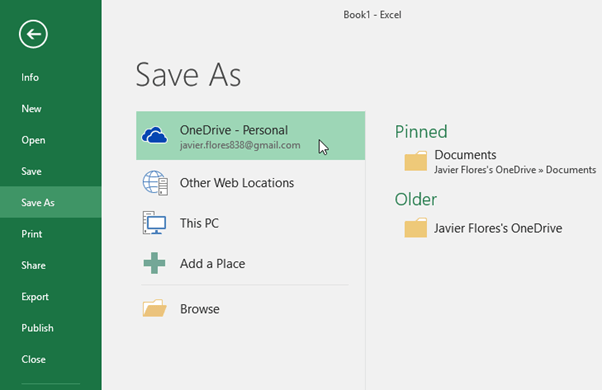
Whenever you’re opening or saving a workbook, you’ll have the option of using your OneDrive, which is the online file storage service included with your Microsoft account. To enable this option, you’ll need to sign in to Office.
Save and Save As
Excel offers two ways to save a file: Save and Save As. These options work in similar ways, with a few important differences:
- Save: When you create or edit a workbook, you’ll use the Save command to save your changes. You’ll use this command most of the time. When you save a file, you’ll only need to choose a file name and location the first time. After that, you can just click the Save command to save it with the same name and location.
- Save As: You’ll use this command to create a copy of a workbook while keeping the original. When you use Save As, you’ll need to choose a different name and/or location for the copied version.
To save a workbook:
It’s important to save your workbook whenever you start a new project or make changes to an existing one. Saving early and often can prevent your work from being lost. You’ll also need to pay close attention to where you save the workbook so it will be easy to find later.
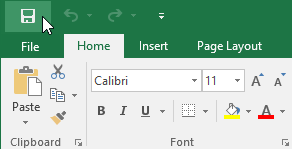
- Locate and select the Save command on the Quick Access Toolbar.
- If you’re saving the file for the first time, the Save As pane will appear in Backstage view.
- You’ll then need to choose where to save the file and give it a file name. To save the workbook to your computer, select Computer, then click Browse. Alternatively, you can click OneDrive to save the file to your OneDrive.
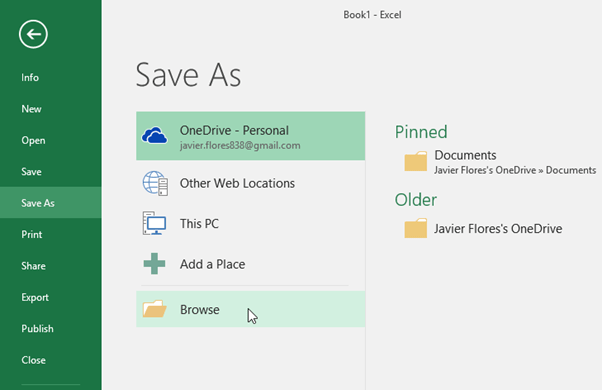
- The Save As dialog box will appear. Select the location where you want to save the workbook.
- Enter a file name for the workbook, then click Save.
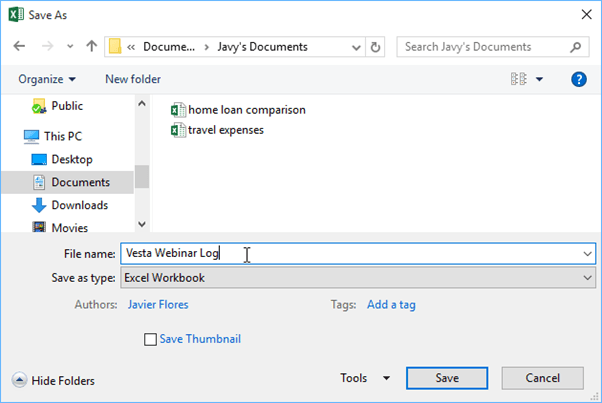
- The workbook will be saved. You can click the Save command again to save your changes as you modify the workbook.
You can also access the Save command by pressing Ctrl+S on your keyboard.
Exporting workbooks
By default, Excel workbooks are saved in the .xlsx file type. However, there may be times when you need to use another file type, such as a PDF or Excel 97-2003 workbook. It’s easy to export your workbook from Excel to a variety of file types.
To export a workbook as a PDF file:
Exporting your workbook as an Adobe Acrobat document, commonly known as a PDF file, can be especially useful if you’re sharing a workbook with someone who does not have Excel. A PDF will make it possible for recipients to view but not edit the content of your workbook.
- Click the File tab to access Backstage view.
- Click Export, then select Create PDF/XPS.
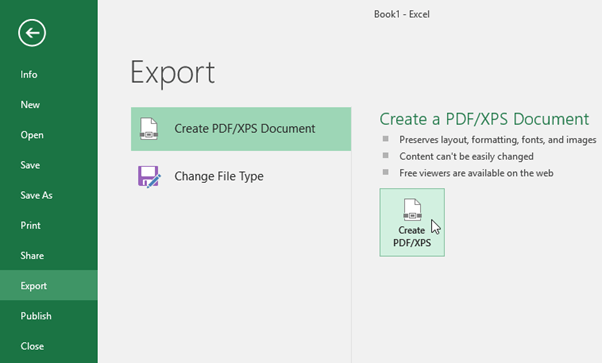
- The Save As dialog box will appear. Select the location where you want to export the workbook, enter a file name, then click Publish.
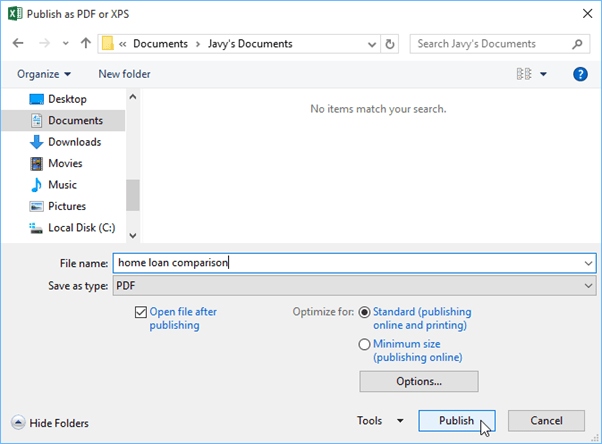
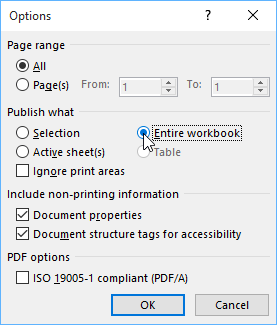
By default, Excel will only export the active worksheet. If you have multiple worksheets and want to save all of them in the same PDF file, click Options in the Save As dialog box. The Options dialog box will appear. Select Entire workbook, then click OK.
Whenever you export a workbook as a PDF, you’ll also need to consider how your workbook data will appear on each page of the PDF, just like printing a workbook.
