
Safety Equipment and Placements
Safety Equipment and Placements are very important at petrol stations. They help protect both customers and petrol attendants from accidents. Knowing where safety tools are and how to use them keeps everyone safe in case of fire, spills, or other emergencies.
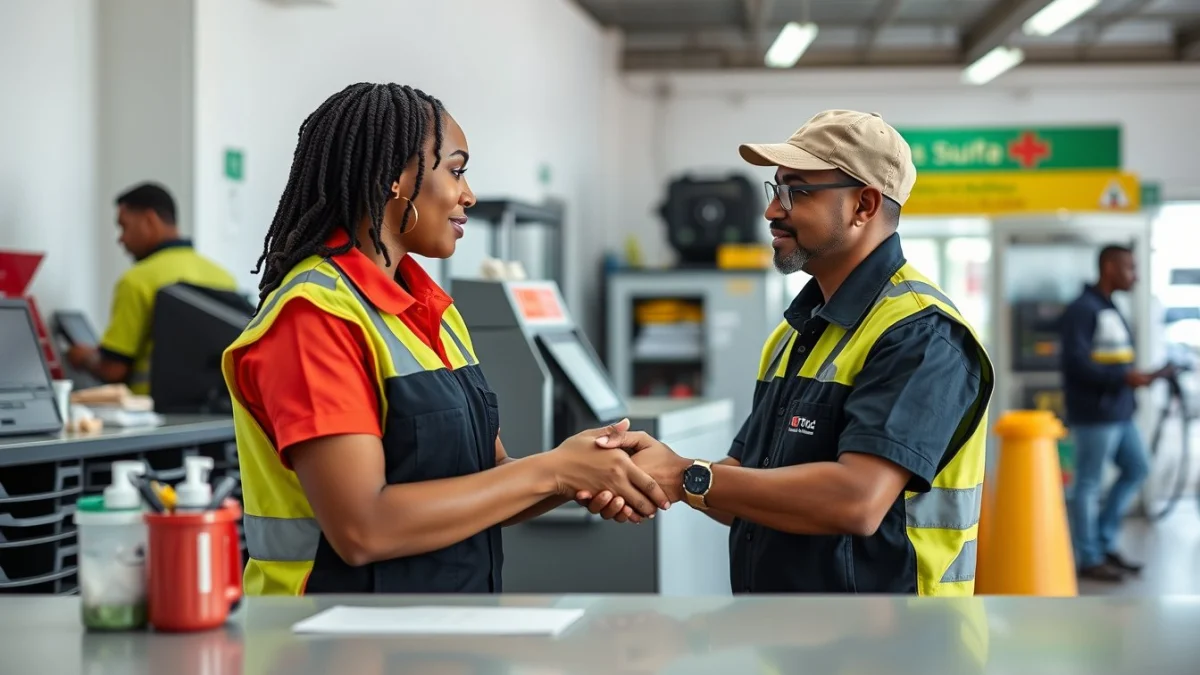
Key Safety Equipment You Will Find at a Petrol Station
Every petrol station has safety equipment placed at strategic points. This equipment is designed to prevent accidents from getting worse or to help handle emergencies quickly. As a petrol attendant, you must know where these items are and how to use them properly.
- Fire Extinguishers: Found near fuel pumps and inside the kiosk. These are for putting out small fires and should always be checked to ensure they are full and working.
- Emergency Stop Button: Usually placed on the fuel pump or nearby walls. This button stops all fuel flow immediately to avoid spills or fire.
- Spill Kits: Located close to areas where fuel is handled. Spill kits contain materials like absorbent pads to quickly clean up fuel spills and prevent slips and fire hazards.
- Safety Signage: Signs like “No Smoking,” “Switch Off Engine,” and “Emergency Exit” are placed in visible areas. They remind everyone to follow safety rules.
- First Aid Kit: Typically stored inside the kiosk or manager’s office. It should be stocked and easy to find in case of minor injuries.
- Fire Blanket: Usually near the fuel pumps or cashier area. This is used to smother small fires or help someone whose clothes catch fire.
Proper placement of safety equipment ensures quick access during emergencies. For example, fire extinguishers should never be blocked or hidden. Emergency stop buttons must be easy to reach and clearly marked.
Good petrol stations regularly check and maintain their safety equipment. This is part of routine safety inspections. As a petrol attendant, you should report any missing or faulty safety equipment immediately to your supervisor. You should also be trained on how to use each item correctly.
Remember, safety at a petrol station is everyone’s responsibility. By understanding Safety Equipment and Placements, you help protect yourself, your colleagues, and customers. Always follow safety guidelines and stay alert for any hazards around the fuel pumps and kiosk.
Live Scenario • Active Situation
You are a petrol attendant working the afternoon shift at a busy petrol station.
There is no single perfect answer. Choose what you would do in this situation.
