
Risk Management Policies and Procedures Explained
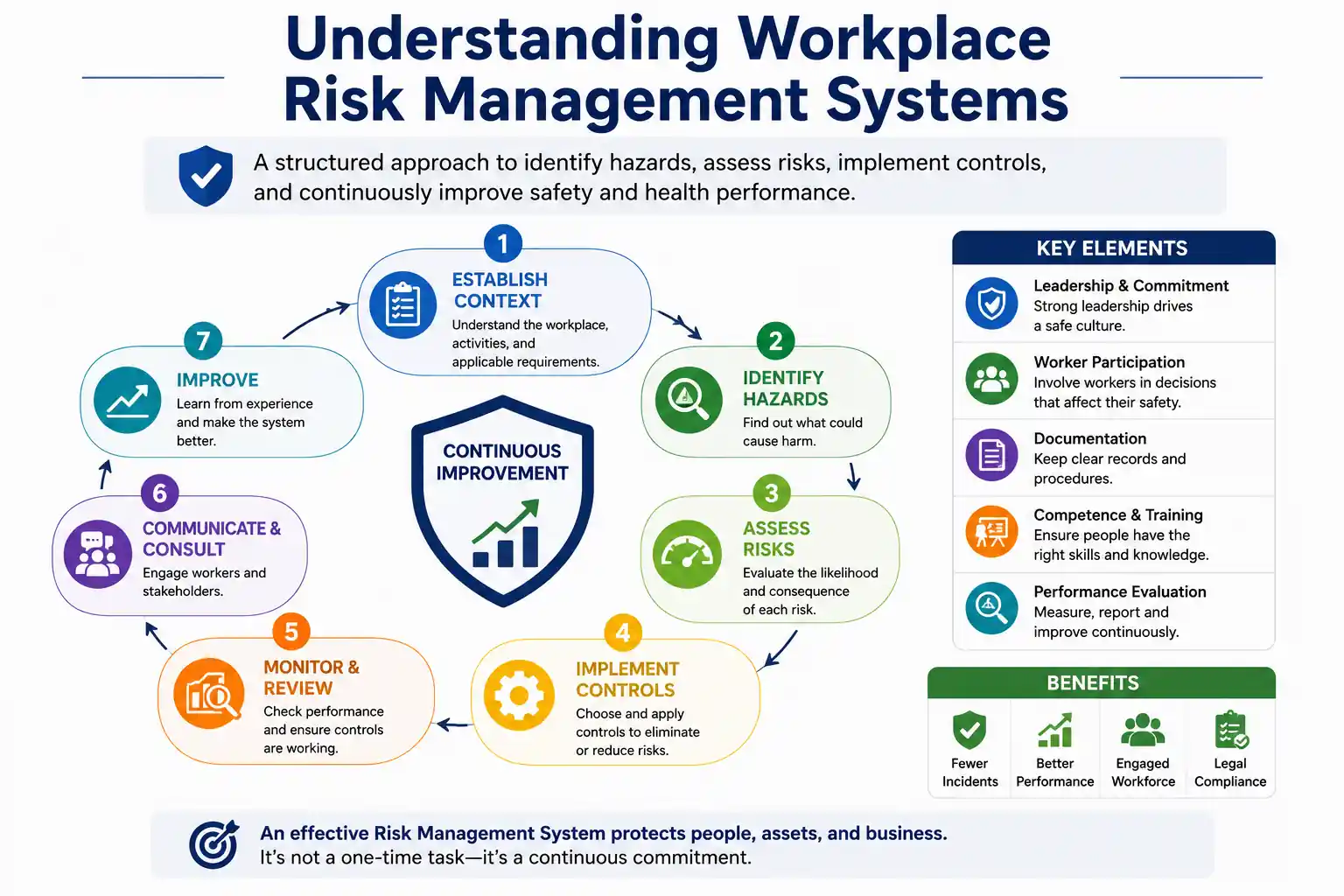
Understanding Workplace Risk Management Systems
Risk Management Policies and Procedures Explained help workplaces identify, assess, and control risks. These policies are formal rules that guide how risks should be handled. Procedures are step-by-step actions to follow when managing those risks.
In South African workplaces, having clear risk management policies ensures that everyone knows their roles in keeping the environment safe. These policies help protect workers from harm and businesses from financial loss.
Key elements of Risk Management Policies and Procedures:
- Risk Identification: Spotting potential hazards or dangers in the workplace.
- Risk Assessment: Evaluating how serious each risk is and who it might affect.
- Control Measures: Putting actions in place to reduce or remove risks.
- Monitoring and Review: Regularly checking if risk controls work and updating procedures when needed.
Having these policies and procedures documented makes it easier for all employees to follow safety guidelines. It also helps businesses comply with South African health and safety laws, like the Occupational Health and Safety Act.
In summary, risk management policies and procedures are vital tools that keep workplaces safe, improve productivity, and reduce costs linked to accidents or damage.
