
Types of Workplace Hazards with Real Examples (Physical, Chemical, Biological)
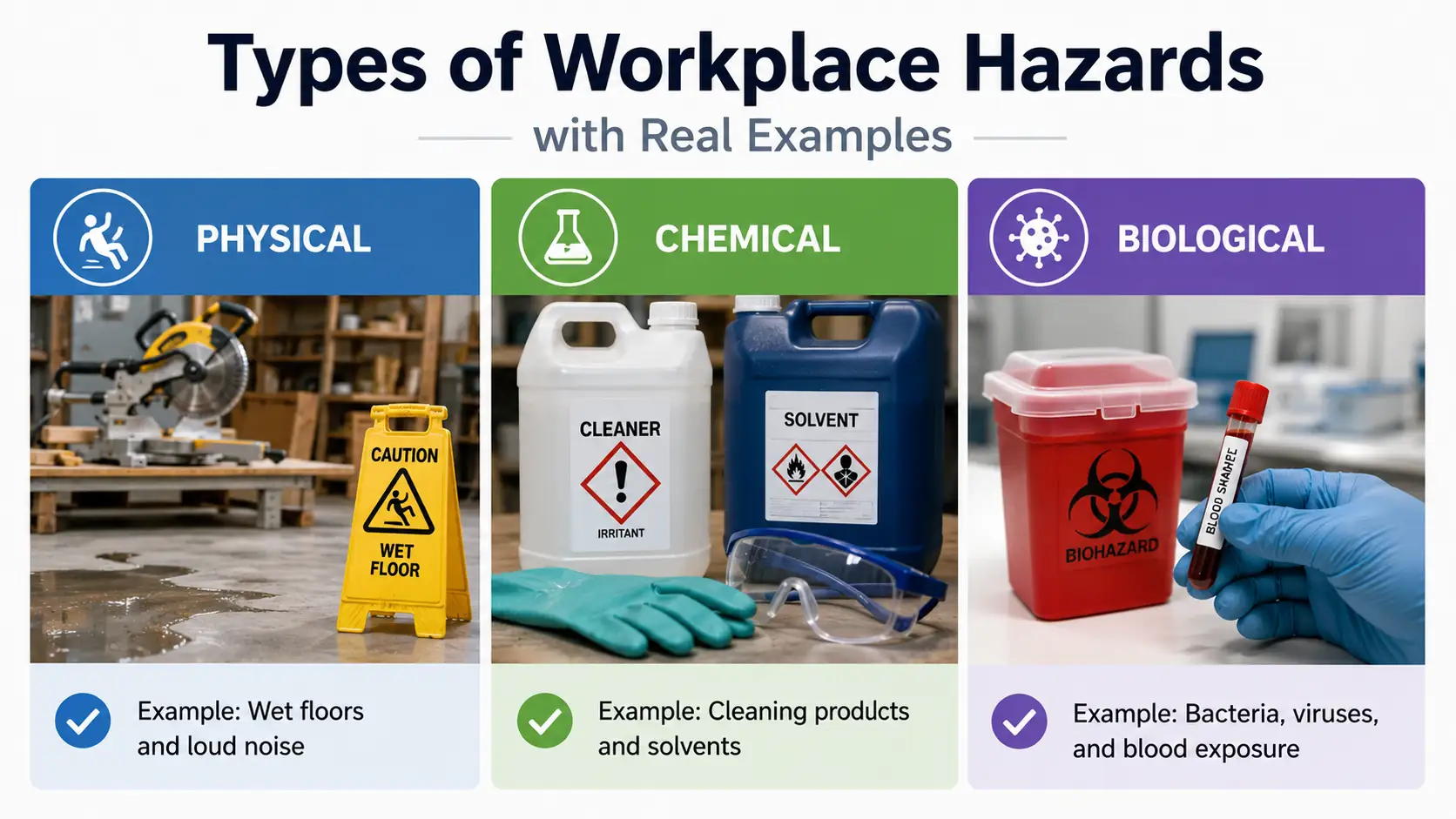
Common Workplace Hazards You Should Know
Types of Workplace Hazards with Real Examples (Physical, Chemical, Biological) are important to understand for a safer working environment. Knowing these hazards helps you identify risks and protect yourself and others.
Physical Hazards
Physical hazards include dangers from the workplace environment that can cause injury or harm. Examples are:
- Slippery floors causing falls.
- Noise from heavy machinery causing hearing loss.
- Extreme heat or cold causing burns or hypothermia.
- Electric shocks from faulty wiring or equipment.
Chemical Hazards
Chemical hazards come from exposure to harmful substances. Workers may face risks when handling or inhaling chemicals. Examples include:
- Cleaning agents causing skin burns or irritation.
- Gas leaks causing poisoning or explosions.
- Solvents causing breathing problems or dizziness.
Biological Hazards
Biological hazards involve exposure to harmful organisms that can cause infections or diseases. These are common in healthcare or agriculture. Examples include:
- Blood or body fluids carrying viruses like HIV or hepatitis.
- Mould in damp buildings causing respiratory issues.
- Animal waste spreading bacterial infections.
By recognising these types of workplace hazards with real examples, you can better manage risks and stay safe at work. Always follow safety rules and report unsafe conditions.
