
Emergency Risk Assessment in the Workplace Explained
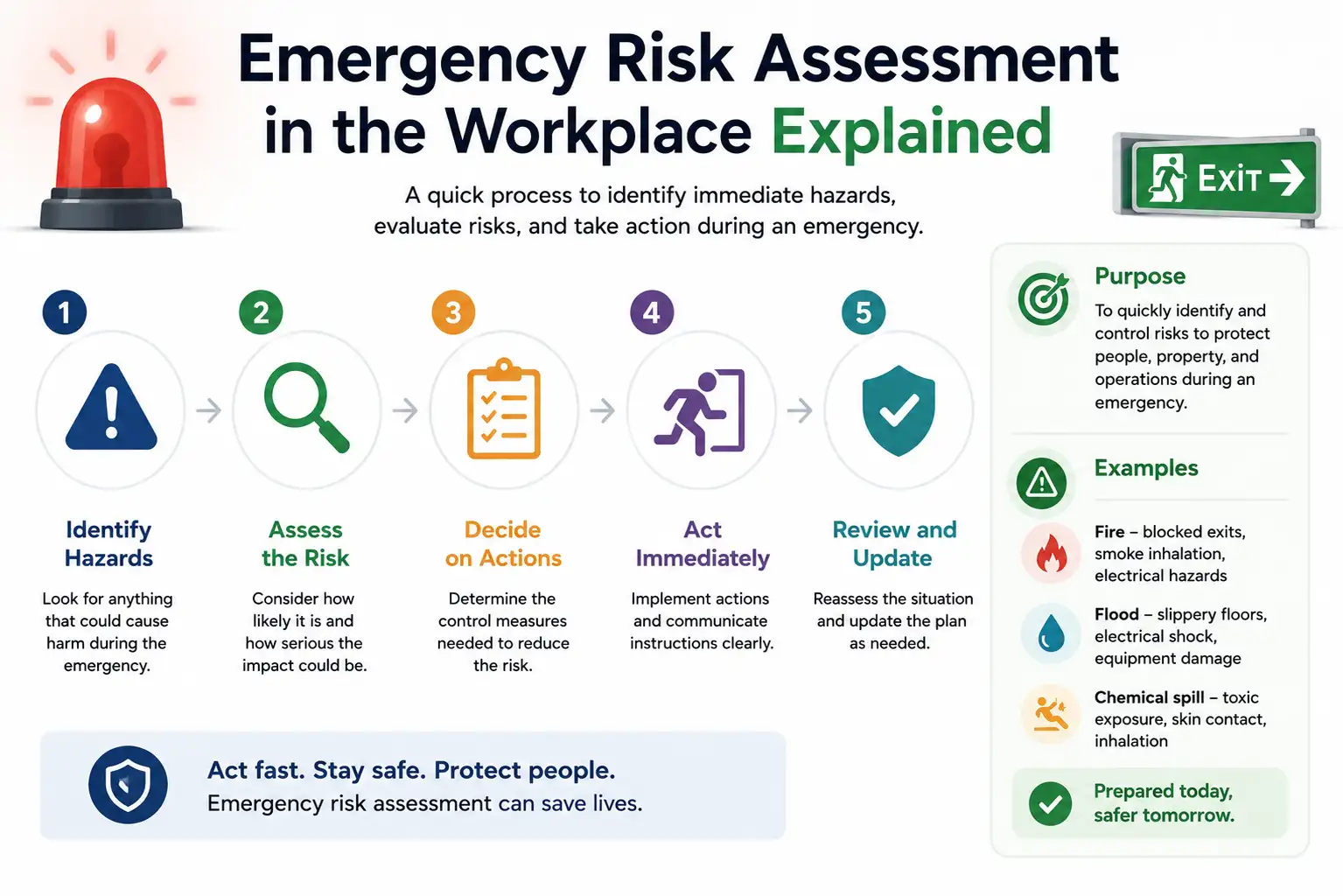
Understanding Emergency Risk Assessment Steps
Emergency Risk Assessment in the Workplace Explained means identifying potential emergencies that could harm people, damage property, or disrupt work. This process helps employers and workers prepare and respond quickly to emergencies like fires, floods, or chemical spills.
First, you must identify possible emergency situations based on your workplace environment and activities. Next, assess how likely each emergency is to happen and the impact it could have. This helps prioritise which risks need the most attention.
Key Steps in Emergency Risk Assessment
- Identify emergency hazards specific to your work area.
- Evaluate the probability of each hazard occurring.
- Assess the potential impact on health, safety, and property.
- Implement controls to reduce the risk or prepare emergency procedures.
- Communicate plans and train staff on emergency responses.
- Regularly review and update the risk assessment and safety plans.
Emergency Risk Assessment in the Workplace Explained shows it is not only about identifying risks but also planning practical actions to keep everyone safe. Proper assessment and planning help reduce damage, prevent injuries, and ensure a fast, organised response when emergencies happen.
