
Examples of Risk Control Measures in Different Industries
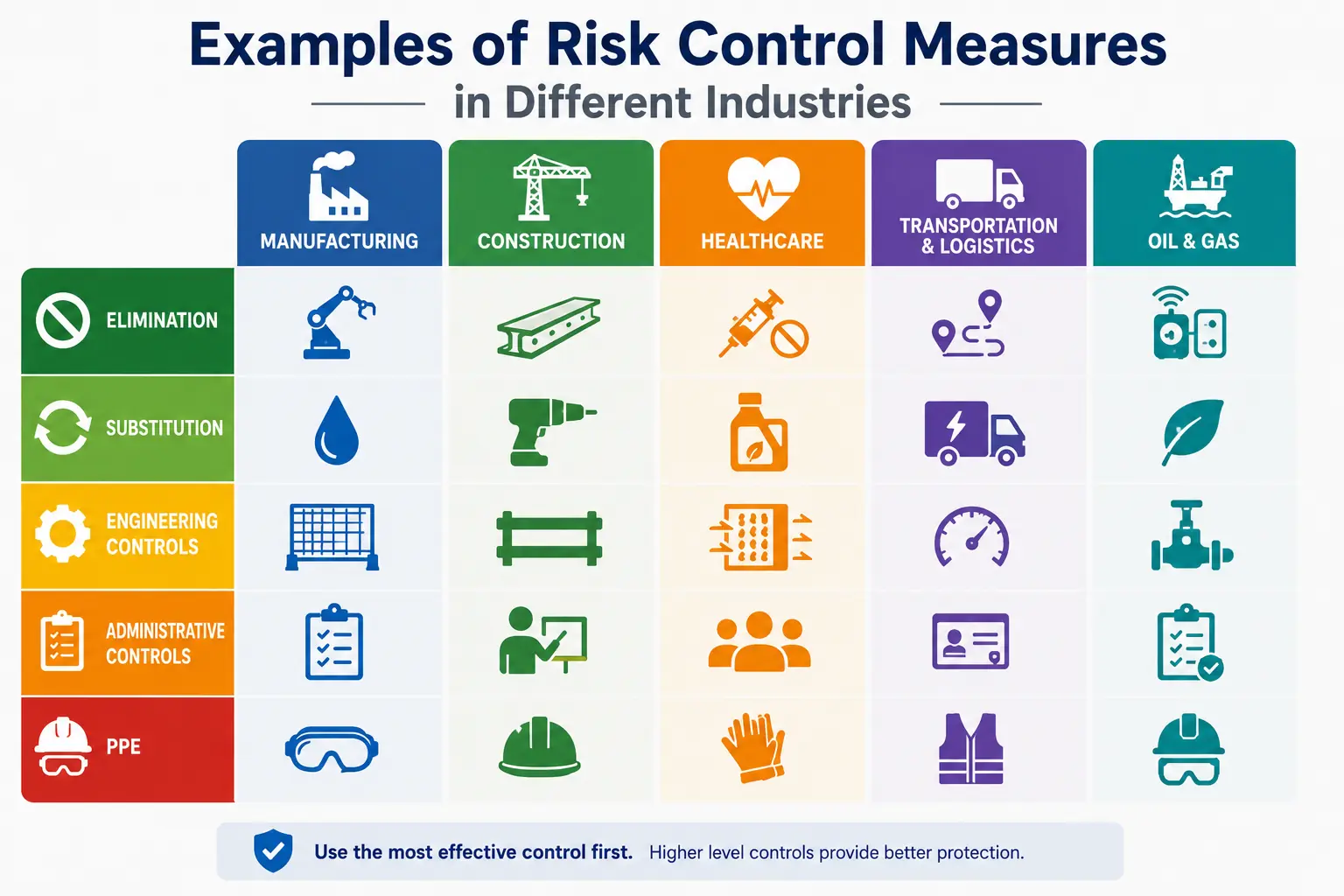
Practical Risk Control Examples Across Various Sectors
Examples of risk control measures in different industries show how workplaces reduce hazards effectively. Understanding these controls helps learners apply good safety practices on the job.
In construction, risk controls include wearing personal protective equipment (PPE) like helmets and boots, using scaffolding correctly, and securing tools to prevent falls. These measures protect workers from injuries caused by falling objects or unstable surfaces.
In healthcare, controlling risks involves sterilising equipment, wearing gloves and masks, and handling sharp instruments carefully. These prevent infections and protect both patients and staff.
The manufacturing industry uses machine guards, safety signs, and regular equipment maintenance to stop accidents. Lockout/tagout procedures ensure machines are off during repairs.
Common Risk Control Measures In Different Industries
- Engineering: Using ventilation systems to reduce dust and fumes.
- Office environments: Organising cables to prevent trips and encouraging ergonomic seating.
- Agriculture: Training workers on chemical safe handling and using protective clothing.
- Mining: Monitoring air quality and enforcing strict use of PPE like respirators.
Choosing the right risk control depends on the hazard, work environment, and available resources. Applying these practical examples helps create safer workplaces across South Africa.
