
What Is a Risk Matrix and How to Use It
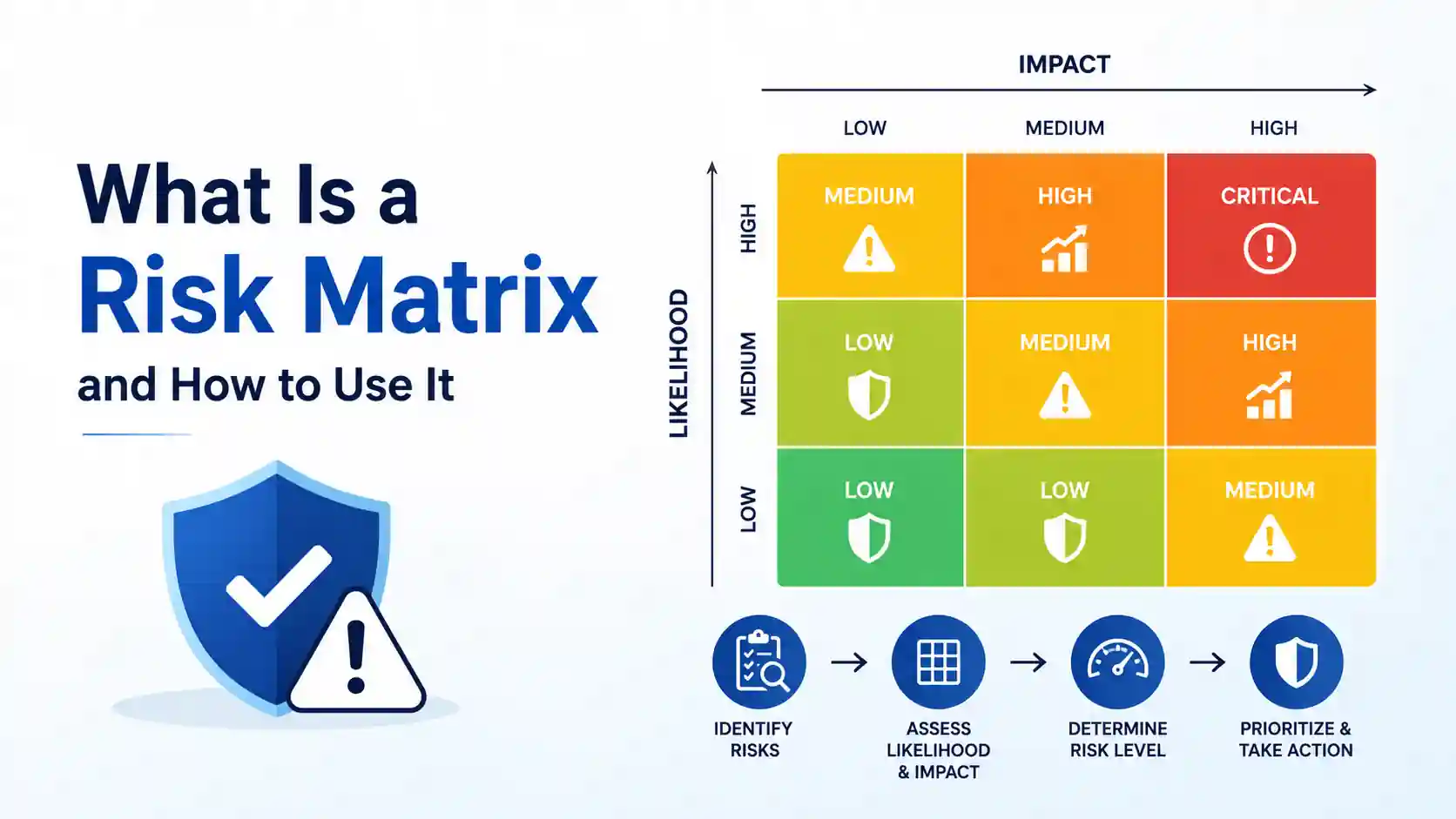
Understanding Risk Assessment with a Risk Matrix
What Is a Risk Matrix and How to Use It? A risk matrix is a simple tool used to evaluate and prioritise risks. It helps you see which risks need urgent action and which ones are less serious. This is important in risk assessment and management to make better decisions about safety, finance, or any project.
The matrix is usually a grid with two main parts: the likelihood of the risk happening and the impact or consequence if it does happen. Likelihood means how often a risk might occur, while impact means how bad the result would be. The risk matrix mixes these two to give a risk level, like low, medium, or high.
Steps to Use a Risk Matrix
- Identify Risks: Write down all possible risks in your project or task.
- Assess Likelihood: Decide how likely each risk is to occur (e.g., rare, possible, likely).
- Assess Impact: Decide the seriousness of the consequence if the risk happens (e.g., minor, major, critical).
- Find Risk Level: Use the matrix to match likelihood and impact for each risk.
- Prioritise Risks: Focus on risks with high levels first, then medium and low.
Using a risk matrix brings clear visual guidance. It makes complicated risks easier to understand and communicate, especially during meetings or reports. Always update the matrix after actions are taken or when conditions change, to keep risk management effective and relevant.
