
Difference Between Hazard and Risk Explained with Examples
Understanding Hazards and Risks in the Workplace
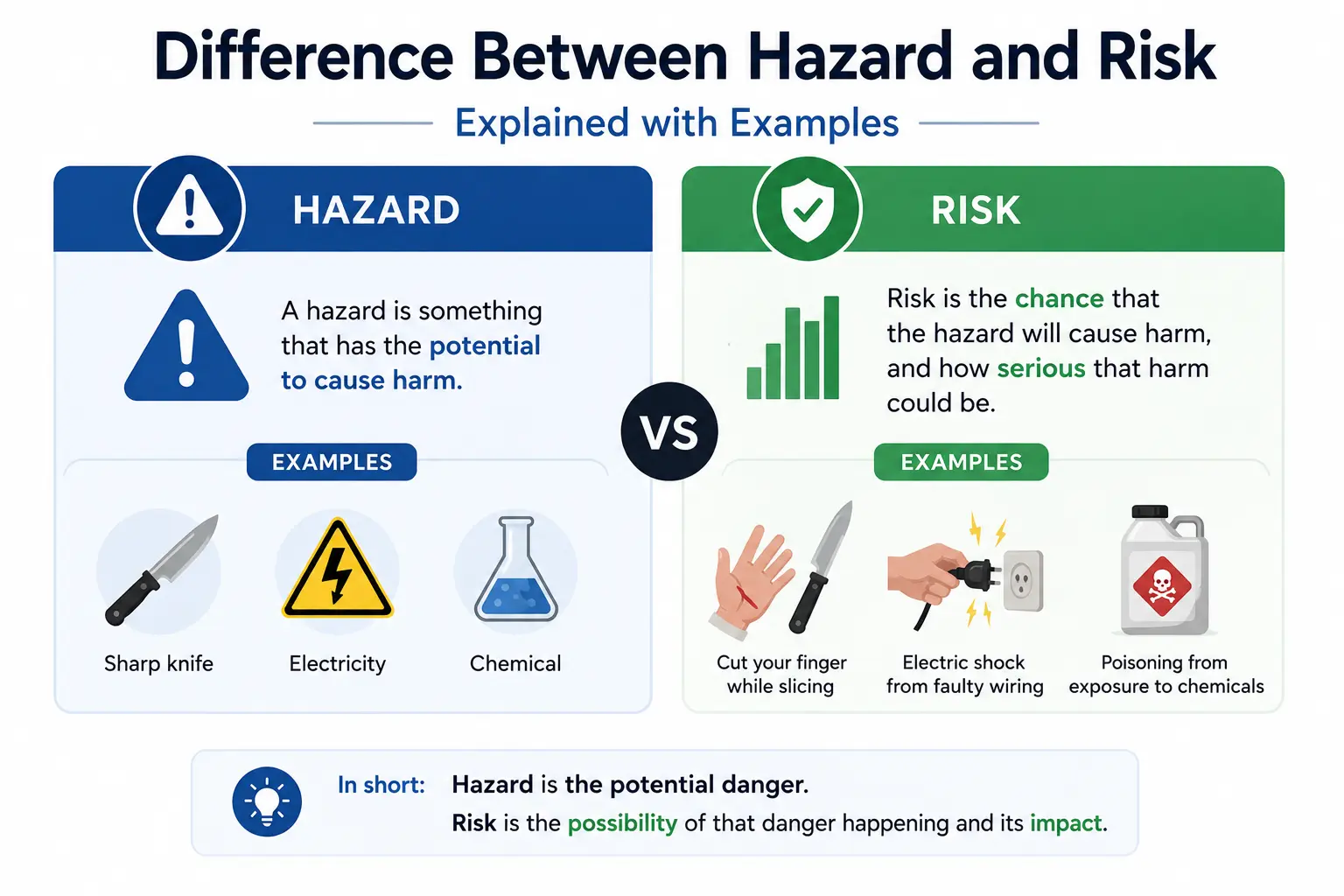
The difference between hazard and risk explained with examples helps learners understand safety better. A hazard is anything that can cause harm, like chemicals, electricity, or slippery floors. A risk is the chance or possibility that the hazard will actually cause harm.
For example, a wet floor is a hazard because it can cause someone to slip and fall. The risk depends on how likely it is that someone will walk on the wet floor and get hurt. If the wet floor is in a busy hallway, the risk is higher. If it is in a seldom-used storeroom, the risk is lower.
Clear Examples
- Hazard: Exposed electrical wires
- Risk: The chance that someone will touch the wires and get shocked
- Hazard: Heavy boxes stacked high
- Risk: The possibility that boxes will fall and injure a worker
Knowing the difference helps workers and managers focus on reducing risks by controlling hazards. For example, covering wires or cleaning wet floors quickly lowers the risk. Understanding hazard and risk is key to good safety practices.
