
How to Calculate Risk Using Likelihood and Severity
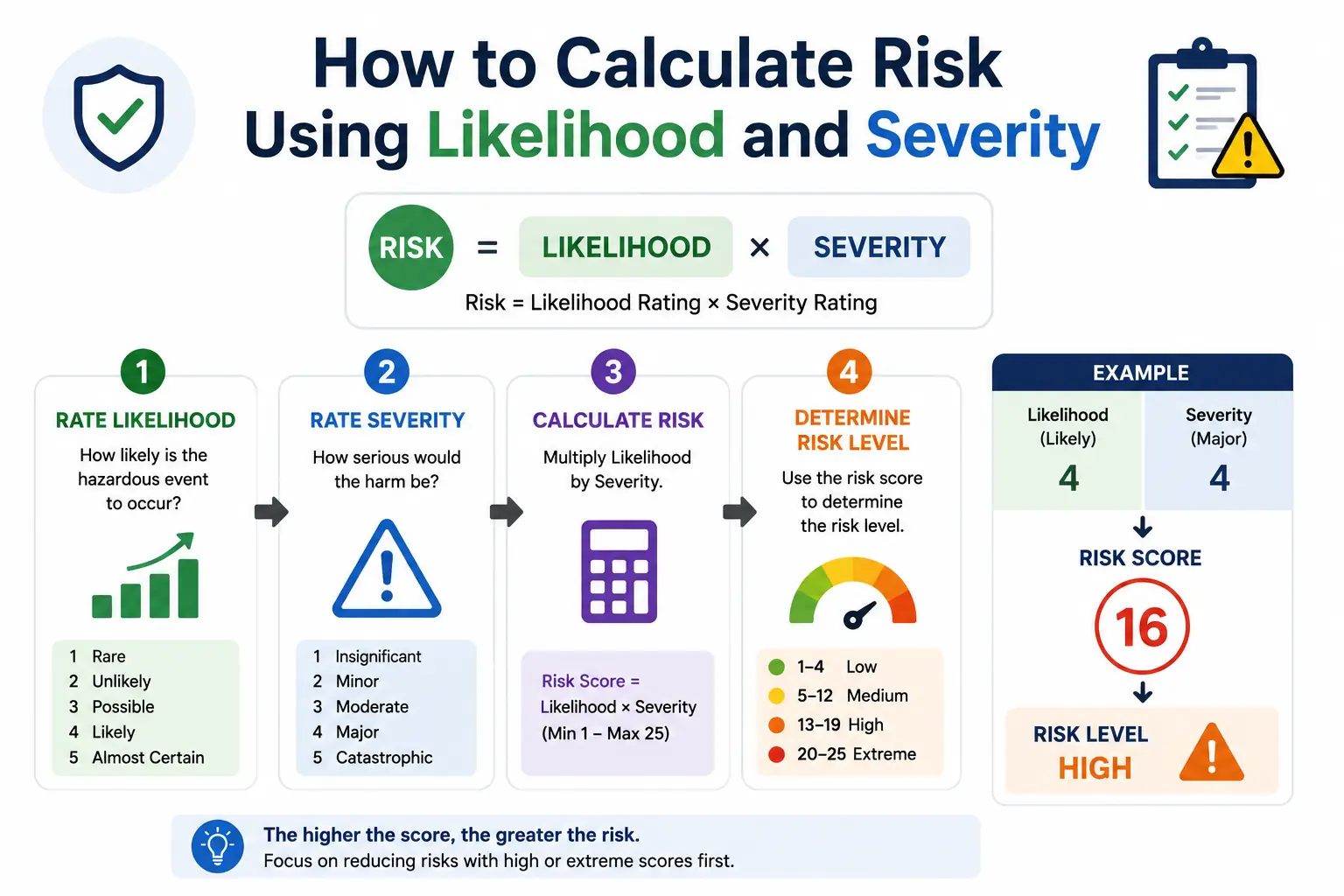
Understanding Risk Calculation with Likelihood and Severity
How to Calculate Risk Using Likelihood and Severity is a key skill in risk assessment and management. Risk helps us understand the chance of a bad event happening and how serious it could be. This makes it easier to plan and keep people safe.
Risk is found by combining two things: Likelihood and Severity. Likelihood means how possible it is for something to go wrong. Severity is about how bad the impact will be if it happens.
Steps to Calculate Risk
- Identify the hazard or risk you want to assess.
- Estimate the Likelihood by asking: How often could this happen? Choose a level like Rare, Unlikely, Possible, Likely, or Almost Certain.
- Estimate the Severity by asking: How serious would the harm be? Levels range from Insignificant, Minor, Moderate, Major, to Catastrophic.
- Use a risk matrix or multiply Likelihood and Severity values to get a risk score.
- Higher risk scores mean more urgent actions are needed to reduce the risk.
For example, if a hazard is Likely (4) and the Severity is Major (4), the risk score is 16. This score shows a high risk that needs attention.
By using Likelihood and Severity in risk calculation, you can prioritise risks and focus on the most dangerous ones first. This approach helps protect workers, assets, and operations effectively.
