
Hierarchy of Controls Explained (Elimination to PPE)
Understanding the Hierarchy of Controls for Safer Workplaces
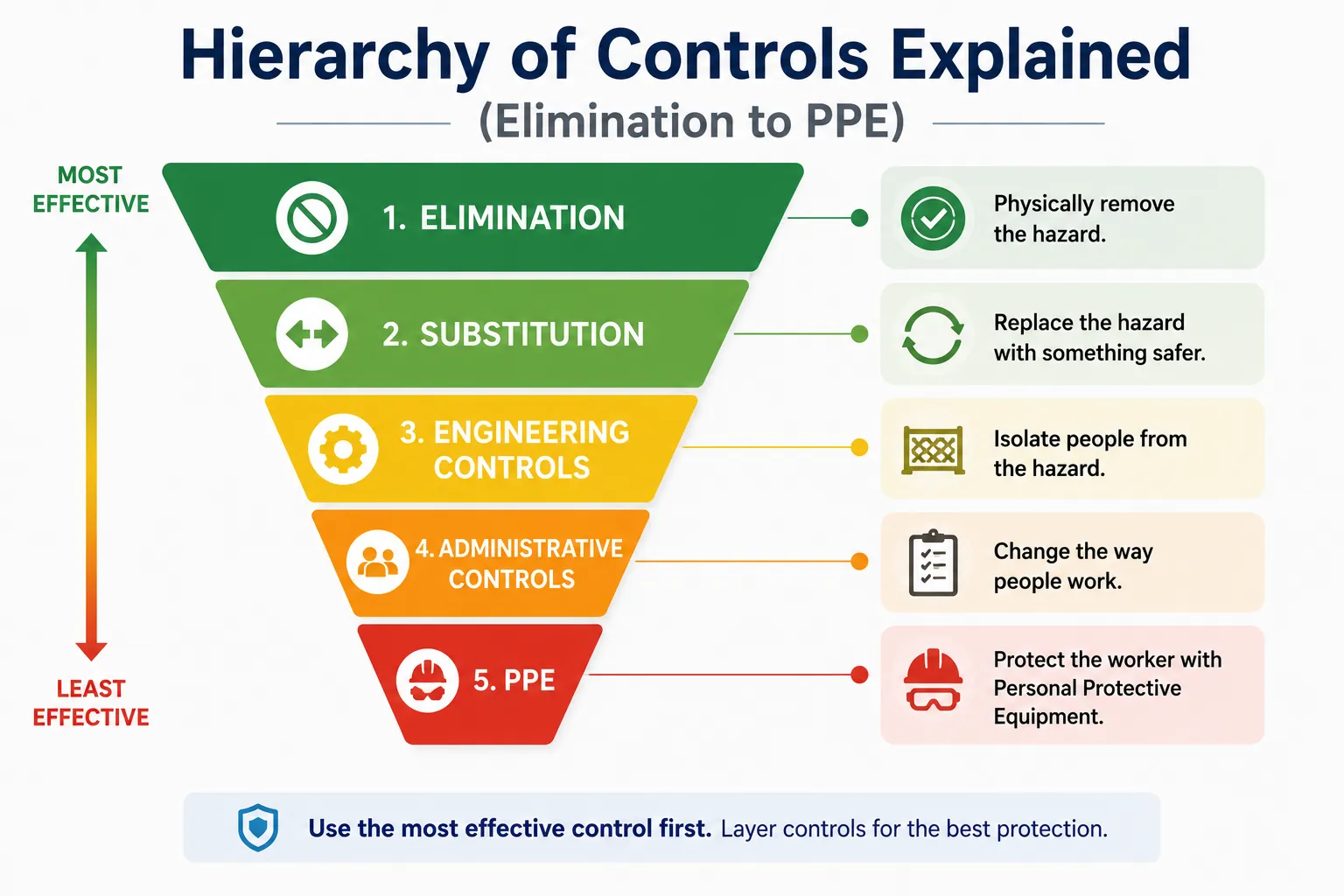
Hierarchy of Controls Explained (Elimination to PPE) is a key concept in managing risks at work. It shows the steps to reduce or remove hazards, starting with the safest methods and ending with protective gear. This helps keep employees safe by using the most effective controls first.
The first step is Elimination. This means completely removing the hazard from the workplace. For example, if a dangerous machine is not needed, removing it eliminates the risk it poses.
Next comes Substitution. Replace a hazardous material or process with a safer one. For instance, using a less harmful chemical instead of a toxic one reduces risk.
After substitution, we use Engineering Controls. These are physical changes to the workplace or equipment that reduce risk. Examples include installing guards on machines or improving ventilation systems.
Administrative Controls follow. These involve changing how people work. Training, safe work procedures, and shift rotations to limit exposure are good examples. Although useful, these controls rely on people following rules.
The last and least effective control is Personal Protective Equipment (PPE). PPE protects workers by creating a barrier against hazards, such as gloves, masks, or safety boots. PPE should only be used when other controls cannot fully remove the risk.
Steps in the Hierarchy of Controls
- Elimination – remove the hazard
- Substitution – replace with something safer
- Engineering Controls – physical changes
- Administrative Controls – change work methods
- Personal Protective Equipment – protective clothing
Using the Hierarchy of Controls Explained (Elimination to PPE) helps create safer work environments. Always aim to apply the highest level of control possible to reduce risks effectively.
