Quick Answer
Knowing basic first aid can help you act fast in emergencies at home or work. This includes simple steps like checking for danger, calling emergency services, stopping bleeding, and performing CPR. A free first aid course with certificate in South Africa can teach you these skills, helping you stay calm and confident to save lives.
If you’re new to first aid, the idea of emergency response can feel overwhelming. But learning practical skills for common situations like cuts, choking, or cardiac arrest helps you protect yourself and others. Many South African workplaces require staff to know first aid, so understanding these basics is useful for everyone.
Why First Aid Skills Matter at Home and Work
Emergencies don’t wait—they can happen anywhere and anytime. Whether a co-worker falls ill or a family member gets injured, knowing what to do immediately makes a big difference. First aid skills can reduce the severity of injuries and sometimes save lives.
South African health and safety rules often require basic first aid knowledge in workplaces. Even if not mandated, having these skills brings peace of mind and helps build safer environments at home and work.
Step-by-Step Guide to Assessing an Emergency
The first step in any emergency is making sure you’re safe. Look around quickly for dangers like fire, electricity, or traffic before helping others. Then check if the person is responsive and breathing.
If the person is unresponsive or seriously hurt, call emergency services straight away. Be ready to give your location, a summary of the problem, and how many people need help. Clear communication helps ambulances arrive faster.
After that, start first aid care while waiting for professional help. Basic actions like stopping bleeding, opening airways, and helping with CPR stabilize the person’s condition.
Handling Common Emergencies
Bleeding: Apply firm pressure on the wound using a clean cloth. If possible, raise the injured area to reduce blood flow. Then cover the wound with a sterile dressing or bandage.
Choking: Encourage the person to cough first. If they cannot breathe, perform back blows between shoulder blades and abdominal thrusts if needed. For babies and children, the technique differs slightly, so learning child-specific first aid is important.
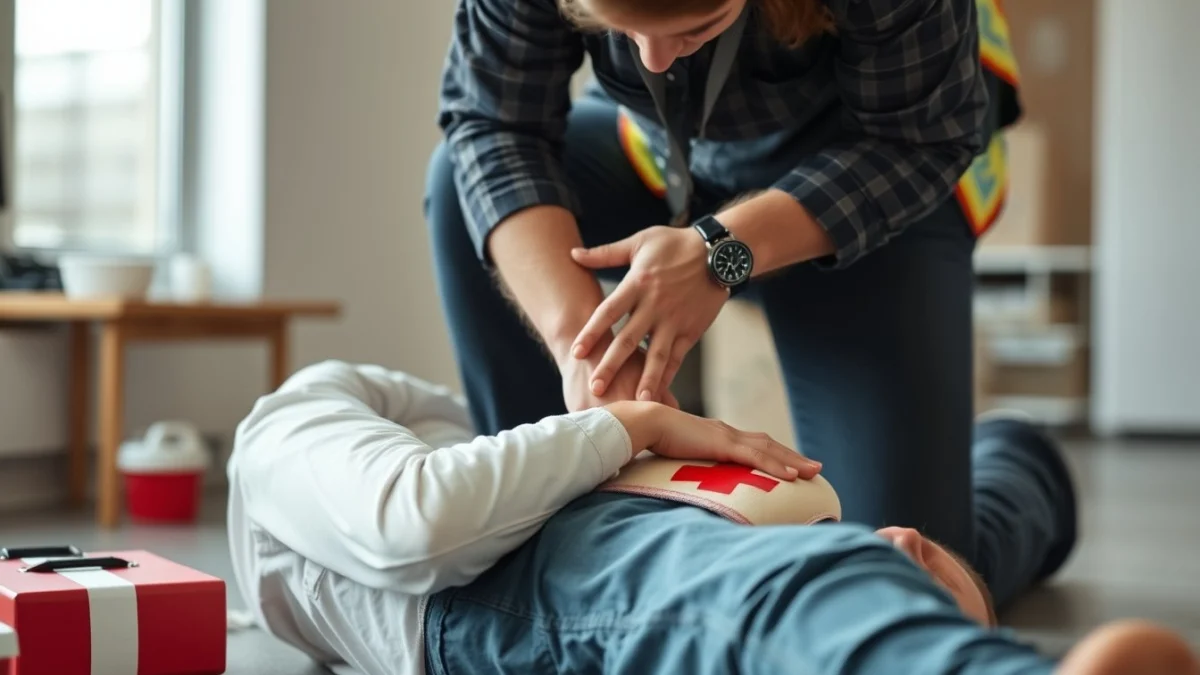
CPR: Check if the person is breathing and has no pulse. Lay them on a firm surface, give chest compressions at the right depth and speed (about 100-120 compressions per minute), and give rescue breaths if trained. Using an AED (Automated External Defibrillator) can improve chances of survival when available.
How to Prepare Your Workplace and Home for Emergencies
A well-stocked first aid kit is essential. Make sure it includes sterile dressings, plasters, antiseptic wipes, gloves, scissors, CPR masks, and tape. Check your kit regularly to replace used or expired items.
Everyone should know where first aid kits and emergency exits are located. Conduct simple safety drills to practise what to do if an emergency happens.
Keep a visible list of emergency phone numbers, including local clinics and ambulance services. Also, train family or co-workers on how to call for help and report incidents clearly.
Common First Aid Mistakes to Avoid
Panicking can make things worse. Stay calm and think clearly before acting.
Avoid moving someone injured unless there’s a direct danger like fire—moving them could worsen fractures or spinal injuries.
Don’t delay calling for emergency help if someone shows signs of serious conditions like stroke, severe allergic reaction, or unconsciousness.
Incorrect CPR technique reduces its effectiveness, so regular training helps you stay confident and ready to act.
Ready to Learn More?
If you want to feel confident handling emergencies, consider enrolling in a free first aid course with certificate in South Africa. It covers everything from basic life support to managing common injuries, helping you be prepared at work and home.