
Benefits and Challenges of Artificial Intelligence
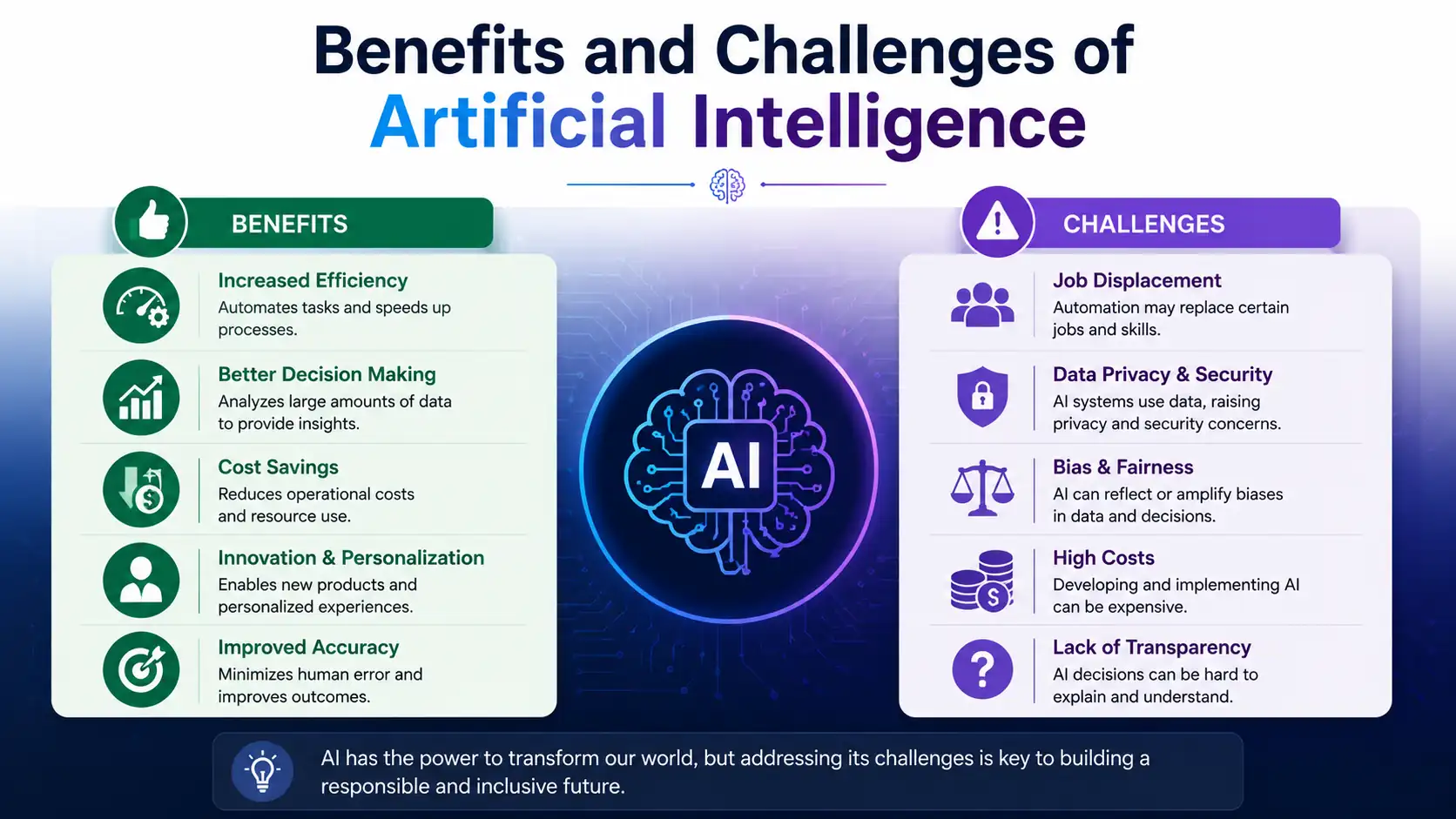
Understanding the Benefits and Challenges of Artificial Intelligence
Artificial Intelligence (AI) is changing the way we live and work. Understanding the benefits and challenges of Artificial Intelligence helps learners make smart choices about using this technology. AI means computers or machines that can think, learn, and solve problems like humans.
One big benefit of AI is how it can handle tasks faster and more accurately than people. For example, AI systems can quickly sort through large amounts of data, helping businesses make decisions faster. This saves time and reduces errors.
AI also helps in everyday life. It powers voice assistants on phones, recommends videos or music, and even translates languages. These features make life easier and more enjoyable.
In healthcare, AI helps doctors to find illnesses early by analysing medical images. It can also suggest the best treatments based on patient history. This can save lives and improve care.
Education is another area where AI is useful. It can offer personalised learning plans for students, helping each learner at their own pace. This supports better understanding and progress.
Key Benefits of Artificial Intelligence
- Speeds up work with accurate data processing
- Makes daily tasks easier through smart assistants and tools
- Improves healthcare with better diagnosis and treatment
- Supports personalised learning for students
- Helps businesses grow with smart decision-making
While AI has many benefits, there are also challenges that learners should be aware of. One challenge is the risk of job losses as machines can replace some human roles. This means workers need to learn new skills to stay relevant.
Another challenge is privacy. AI systems often use personal data to work well. If this data is not handled carefully, it can lead to misuse or hacking, putting people’s private information at risk.
Bias in AI is also a problem. If the data used to train AI has unfair biases, the AI’s decisions can be unfair too. This can affect important areas like hiring or law enforcement.
Finally, AI can be complex and expensive to build and maintain. Smaller companies or schools might struggle to access the best AI tools, creating inequalities.
Important Challenges of Artificial Intelligence
- Job losses in certain industries due to automation
- Privacy risks from data use and storage
- Bias and unfair decisions in AI outputs
- High costs and complexity of AI systems
Understanding both the benefits and challenges of Artificial Intelligence ensures learners can use AI safely and effectively. Responsible use of AI will help society gain the most from this powerful technology.
Live Scenario • Active Situation
You are a data analyst at a healthcare company exploring AI tools to improve diagnosis accuracy.
There is no single perfect answer. Choose what you would do in this situation.
