Quick Answer
Cleaning and sanitising food preparation areas properly means first removing all visible dirt and food residues, then using a safe sanitiser to kill harmful germs. This step-by-step approach stops contamination, protects against food poisoning, and keeps kitchens hygienic.
Many beginners wonder how to do this correctly, especially in busy kitchens or food businesses in South Africa. Following the right routine helps avoid mistakes, keeps food safe, and meets local hygiene standards.
Why Proper Cleaning and Sanitising Matter in Food Prep
Cleaning and sanitising food prep areas go hand in hand to make food safe. Cleaning removes visible dirt and food scraps where bacteria can grow, while sanitising kills the germs you can’t see. Skipping either step puts food at risk of contamination.
In South African kitchens—from home cooks to restaurant staff—this routine helps prevent foodborne illnesses. It also meets hygiene rules set by health authorities to protect consumers. A clean kitchen reduces risks like cross-contamination between raw and cooked foods.
Difference Between Cleaning and Sanitising
Cleaning is washing surfaces with detergent and hot water to remove food bits, grease, and dirt.
Sanitising means applying a chemical or heat to kill or lower germs to safe levels. Sanitising won’t work well if you don’t clean first, because dirt blocks the sanitiser’s effect.
For example, if a chopping board has raw meat juice, clean off the juice first before applying sanitiser to make it safe for salads or bread.
Step-by-Step: Cleaning and Sanitising Food Prep Areas
- Clear away food scraps and rubbish. Remove spills, bits of food, and waste to avoid pests.
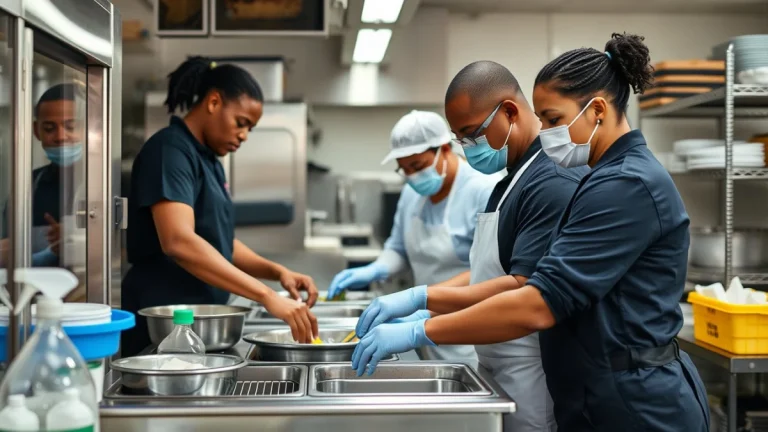
- Wash with detergent and hot water. Scrub all surfaces, utensils, and equipment thoroughly.
- Rinse. Use clean water to wash away detergent and loosened dirt.
- Apply a food-safe sanitiser. Follow product instructions carefully and leave it to work for the recommended time.
- Dry completely. Use clean cloths or let surfaces air dry to stop germs from growing in moisture.
Common Mistakes to Avoid
Many people making food safety mistakes miss simple steps that can cause contamination:
- Skipping cleaning and applying sanitiser on dirty surfaces.
- Using the wrong sanitiser concentration—too weak won’t kill germs, too strong can be unsafe.
- Using the same cleaning cloth for everything without washing it frequently.
- Ignoring hard-to-reach spots where bacteria like to hide.
- Not drying surfaces properly after sanitising.
Following a cleaning schedule and training food handlers helps avoid these errors in busy kitchens.
What Cleaning Chemicals Are Safe?
Food preparation areas need sanitising agents that are safe for contact with food. Common options include chlorine-based solutions and quaternary ammonium compounds. Always read labels and follow South African health guidelines to avoid harmful residues.
How Often Should You Clean and Sanitise?
Surfaces should be cleaned and sanitised before starting food prep, after handling raw food, after spills, and regularly throughout busy work periods to reduce contamination risk.
Can You Use Household Bleach?
Yes, but only if diluted correctly—usually between 50 and 200 ppm available chlorine. Bleach solutions should be made fresh daily and rinsed off surfaces before using them again.
How Does Cleaning Stop Cross-Contamination?
Cross-contamination happens when dangerous germs or allergens move from one food or surface to another. Cleaning removes the dirt and food bits that carry these germs, and sanitising kills the germs that remain. Together, they break the chain of contamination.
Take Your Food Safety Skills Further
Cleaning and sanitising right is just one part of keeping food safe. If you want to learn practical food safety and hygiene skills along with a free certificate, check out EduCourse’s Food Safety and Hygiene Certificate Course. It’s easy to follow, beginner-friendly, and designed for food handlers across South Africa.