Quick Answer
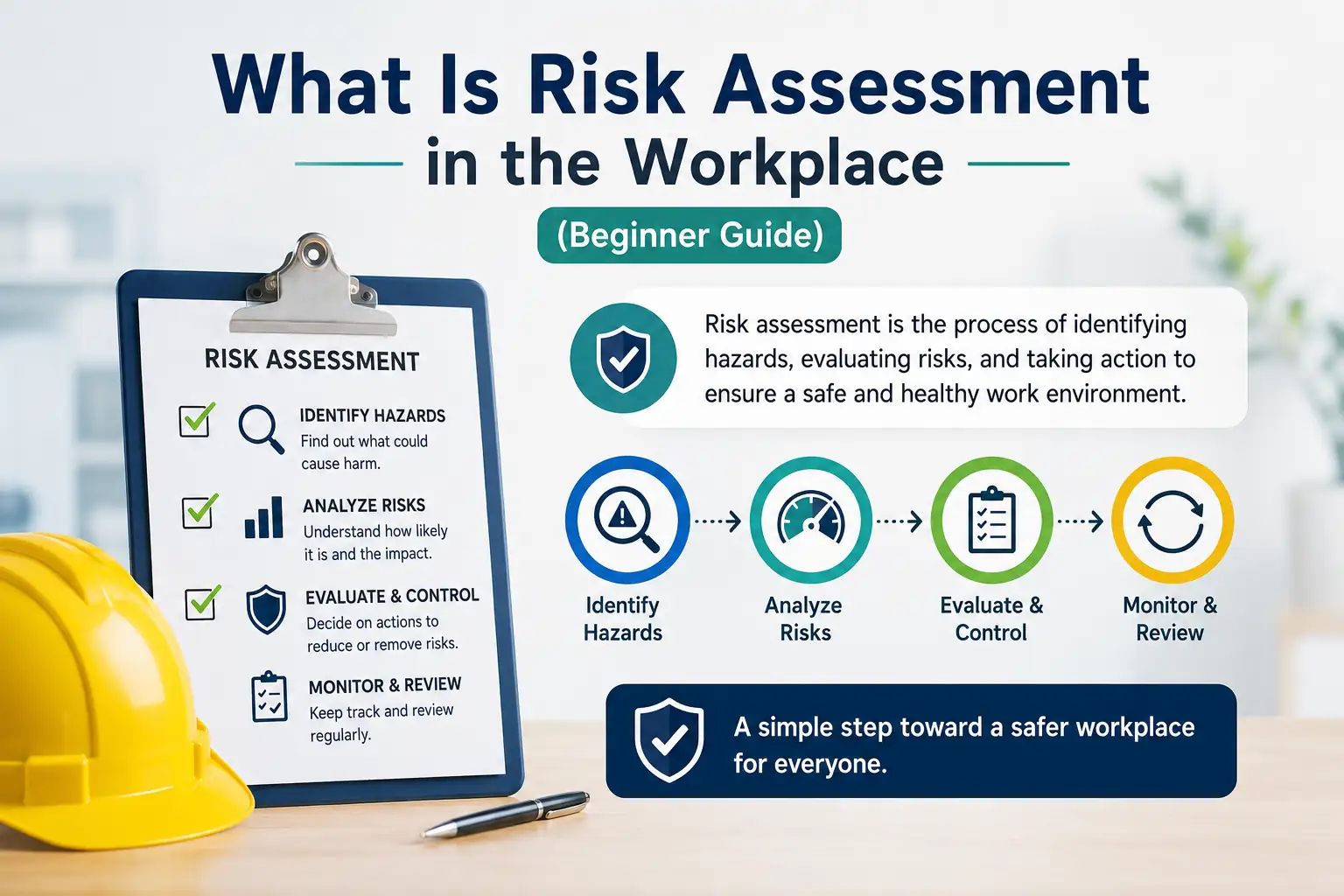
A risk assessment in the workplace is the process of identifying hazards, figuring out how likely they are to cause harm, and putting measures in place to prevent accidents or injury. It keeps workers, visitors, and contractors safe and helps workplaces follow South African safety laws. It’s a practical, step-by-step way to spot risks before they cause problems.
If you’re new to workplace safety, knowing how to conduct a risk assessment helps you create safer workspaces and avoid common mistakes. This guide is made with beginners in mind and includes simple steps to do your own risk assessment, especially for South African workplaces.
What Does Risk Assessment Mean in the Workplace?
Risk assessment is a clear method to find hazards—anything that might cause harm—then understand the risk, which is how likely it is those hazards will actually hurt someone. Hazards can be wet floors, loud noise, chemicals, or faulty wiring. The risk is about chance and severity of injury or illness from these hazards.
Understanding this helps workplaces focus on the most dangerous risks first. Under South Africa’s Occupational Health and Safety (OHS) Act, employers must identify and manage these risks to keep everyone safe.
Why Risk Assessments Matter in South African Workplaces
Doing risk assessments isn’t just about following the law. It means fewer accidents and healthier staff, which improves work life and productivity. It also protects visitors and contractors who might not know the workplace as well as employees do.
South African workplaces face unique challenges. From construction sites with heavy machinery to offices with repetitive strain risks, risk assessments help spot hazards that are often specific to your work environment. Starting with the basics helps you build confidence in managing workplace safety.
Easy Steps to Carry Out a Risk Assessment
Anyone new to safety can follow these simple steps when doing a risk assessment:
- Identify hazards: Walk through each area and list anything that might cause harm. Think about physical, chemical, and biological hazards.
- Assess risks: Decide how likely each hazard is to cause harm and how serious that harm would be. A risk matrix (low, medium, high) can help.
- Choose control measures: Use the hierarchy of controls. First, try to remove the hazard completely or replace it with something safer. If not possible, use engineering controls, change how people work, or provide personal protective equipment (PPE).
- Implement controls: Put your chosen safety measures into action, like fixing equipment or updating work procedures.
- Review and monitor: Keep checking if controls work and update the assessment when things change or after incidents.
Keeping records of your risk assessments is important—they show that you are meeting legal duties and help during safety audits or inspections.
Common Hazards and Mistakes to Watch Out For
Common hazards differ by workplace type. For example, a construction site focuses on dangers like working at heights and electrical risks. An office may look out for fire hazards, slips, trips, or ergonomic problems.
Beginners often make mistakes like underestimating risks, ignoring input from workers, or forgetting to update risk assessments regularly. Also, confusing hazards (things that can cause harm) with risks (the chance harm will happen) can lead to missed dangers.
Using simple checklists and templates can make sure you don’t miss anything and keep your risk assessments clear and easy to review.
Learn Risk Assessment Skills for Free
If you want a straightforward way to build your skills, check out EduCourse’s Free Risk Assessment Course with Certificate in South Africa. It covers all you need to know from spotting hazards to applying controls. The course is designed for beginners and fits right into South African workplace safety requirements.
Remember, the best risk assessments aren’t just done once—they require regular updates, good communication, and careful training.