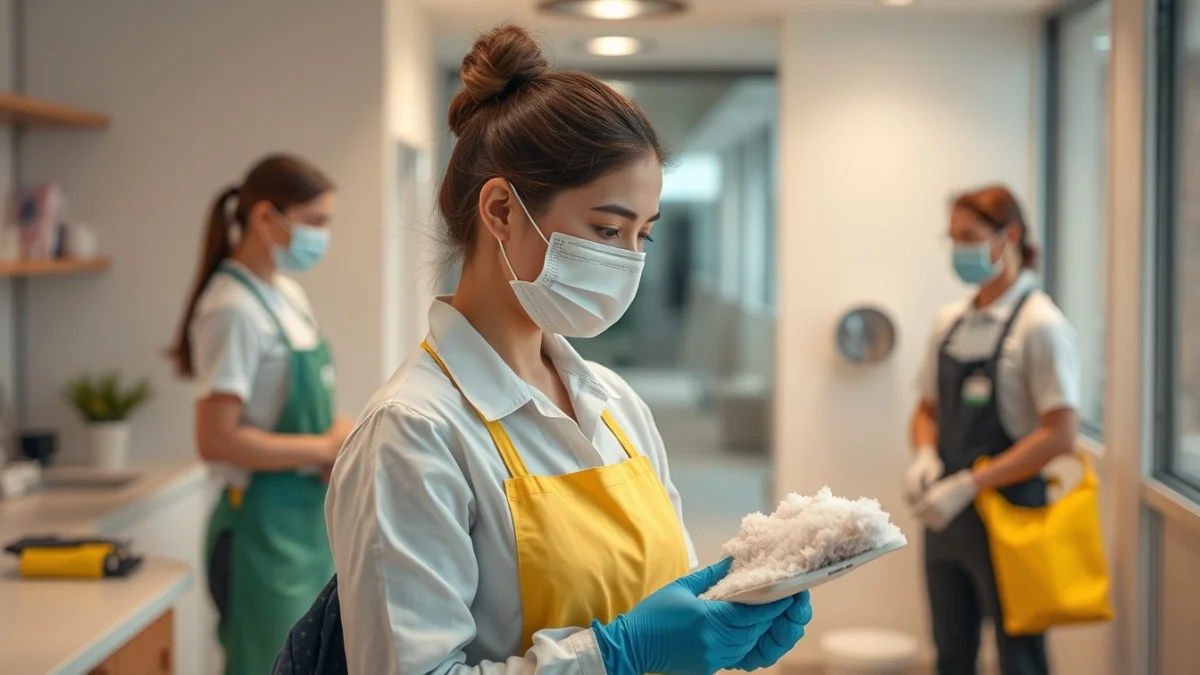
What Does a Professional Cleaner Do?

Quick Answer

A professional cleaner ensures clean, safe, and hygienic environments by performing thorough cleaning, proper waste disposal, and sanitation duties. They use suitable tools, chemicals, and techniques to maintain workplace hygiene, protect health, and support daily operations.

What Does a Professional Cleaner Do?

Professional cleaners play a vital role in maintaining cleanliness and hygiene in various settings such as offices, schools, hospitals, and commercial spaces. Their responsibilities include more than just sweeping or mopping; they follow systematic cleaning procedures to ensure workplaces are safe and presentable. Learning how a professional cleaner operates can help you understand the skills required and the importance of this work in South African workplaces. This is why many learners look for a free cleaner certificate course in South Africa to start their career on the right foot.

At its core, the job of a cleaner involves removing dirt, dust, and waste to create a clean environment. But effective cleaning also means understanding hygiene standards, safety protocols, and customer service—all essential to professional cleaning. By learning cleaning techniques, proper use of cleaning chemicals, and personal protective equipment (PPE), cleaners contribute significantly to workplace health and safety.

Roles and Responsibilities of a Professional Cleaner

General cleaners are responsible for routine cleaning tasks that keep environments sanitary and operational. This includes sweeping, vacuuming, dusting, mopping floors, cleaning windows, and emptying waste bins. They must adapt their methods depending on the setting—whether it’s a commercial office, healthcare facility, or residential area.

Safety is a major consideration. Cleaners must know how to use cleaning chemicals safely, wear appropriate PPE like gloves and masks, and follow guidelines to protect themselves and others. They should understand chemical labels and be trained in handling spills or hazardous waste, which ensures compliance with workplace hygiene standards.

Besides cleaning, professional cleaners often support sanitation and disinfection. This involves targeted cleaning of frequently touched surfaces to reduce the spread of germs and infections—a critical task in public spaces, especially during health crises.

Essential Skills and Techniques Used by Professional Cleaners

Professional cleaners must master a range of practical skills. Surface cleaning techniques vary for different materials such as glass, wood, or metal. Floors require specific care depending on type—tiled floors may need disinfectants, while carpets often require vacuuming or steam cleaning.

Good time management is crucial. Cleaners organize their tasks to work efficiently, prioritizing areas based on foot traffic and cleanliness needs. They often follow checklists that outline daily, weekly, or monthly cleaning routines to ensure no area is overlooked.

Effective waste management is also part of the job. This includes sorting waste, disposing of general refuse correctly, and recycling where possible to support environmental sustainability. Cleaners play a key role in reducing workplace environmental impact.

Common Challenges and Mistakes to Avoid

One common mistake is improper use of cleaning chemicals, which can damage surfaces or pose health risks. Cleaners must always read labels carefully, follow instructions, and never mix incompatible substances.

Another issue is neglecting PPE, which exposes cleaners to hazards like chemical splashes or biohazards. Consistent use and maintenance of PPE (for example, replacing masks or gloves when damaged) are necessary protections.

Time mismanagement can result in rushed cleaning and missed areas. Using a clear cleaning schedule and checklist helps maintain consistency and quality.

Checklist for a Professional Cleaning Routine

  • Put on appropriate PPE before starting work.
  • Start by dusting all surfaces from top to bottom.
  • Clean windows and glass areas using the recommended supplies.
  • Sweep and mop floors according to their type.
  • Empty waste bins, separating recyclable and non-recyclable waste.
  • Disinfect high-touch areas like door handles and switches.
  • Store cleaning tools and chemicals safely after use.
  • Report any maintenance issues noticed during cleaning.

How Professional Cleaning Skills Benefit Your Career

Mastering professional cleaning skills improves your employability and opens doors to roles in janitorial services, housekeeping, and commercial cleaning. A cleaner certificate validates your knowledge and commitment to quality, which many employers value in South Africa’s competitive job market.

Accessible learning options like EduCourse’s General Cleaner Certificate Course provide free cleaning training for beginners. This course covers everything from cleaning basics and safety to customer service and time management, giving you a solid foundation for a cleaning career.

If you want to expand your understanding of workplace hygiene or develop commercial cleaning skills, this online cleaning course with certificate can help you learn at your own pace from home.

Experienced cleaners: Building a reputation for reliability, attention to detail, and professionalism will make you stand out. Continuous learning keeps your cleaning skills up to date and helps you explore advanced cleaning and sanitation courses later.

FAQ

What safety precautions should professional cleaners follow?
Professional cleaners should always wear the correct PPE, handle cleaning chemicals carefully, follow safety procedures to prevent slips or falls, and properly store tools and hazardous substances.
Can I become a professional cleaner without prior experience?
Yes, many cleaner courses online, including beginner cleaner courses with certificates, are designed to teach you cleaning skills from the basics, making it easy to start a cleaning career without previous experience.
What is the difference between cleaning and sanitation?
Cleaning removes dirt and impurities from surfaces, while sanitation involves disinfecting and killing germs to reduce infection risks. Both are important parts of professional cleaning routines.
How long does it take to complete a general cleaner course online?
Most online cleaning certification courses for beginners can be completed within a few weeks, depending on your pace and the course structure.
Ready to start your journey as a professional cleaner? Enrol in EduCourse’s General Cleaner Certificate Course today for free and gain the skills and confidence to excel in the cleaning industry.
EduCourse Learning Team

The EduCourse Learning Team creates practical, beginner-friendly online learning content designed to help individuals build real skills at their own pace. With a focus on accessibility and structured learning, the team develops guides and resources across areas such as Microsoft Office, data entry, and workplace skills.

Their goal is to make online learning simple, flexible, and useful for anyone starting their skills development journey.

Articles: 369

EduCourse Help

Find quick answers to common questions.

How to Register

To register on EduCourse:

  1. Go to the registration page:

    Register on EduCourse
  2. Enter your details (name, email, and password)
  3. Click Register / Sign Up
  4. Log in to your account

You can then enrol in any course and start learning immediately.

Was this helpful?
Thank you for your feedback.

How to Start a Course?

To start a course on EduCourse, you must first be logged in to your account.

  1. Go to the Browse Courses page:

    Browse EduCourse Courses
  2. Choose the course you want to study
  3. On the course page, click Take This Course
  4. After enrolling, start with Lesson 1

Some courses are open, so you may not see the Take This Course button. If that happens, simply start with Lesson 1.

Please make sure you are logged in so your course progress can be saved.

Was this helpful?
Thank you for your feedback.

Downloading Certificates

You must be logged in and finished a course. To download a certificate on EduCourse, you have two easy options.

  1. You can download it from the completed course page itself.
  2. You can also access your certificates by going to the menu, choosing Academic Records, and then selecting

    My Certificates
    .

To access your certificate, click the certificate icon.

On the certificate page, you can click the certificate preview to download it or scroll down and click Download PDF.

Was this helpful?
Thank you for your feedback.

How to Update Certificate Name?

To update your name on EduCourse, you must first be logged in to your account.

  1. Go to My Details from the menu.
  2. Edit your name in the profile section.
  3. Click Update to save your changes.

After updating your name, you can re-download your certificate with the corrected details.

Was this helpful?
Thank you for your feedback.

How to Verify a Certificate?

There are multiple ways to verify an EduCourse certificate.

1. Scan the QR Code

The easiest way to verify a certificate is to scan the QR code displayed on the certificate using your mobile device.


2. Verify Online

You can also verify a certificate online by visiting:


Verify Certificate

Enter either:

  • The user's South African I.D Number
  • Or the Certificate ID Number

The system will display matching certificate records if available.

Was this helpful?
Thank you for your feedback.