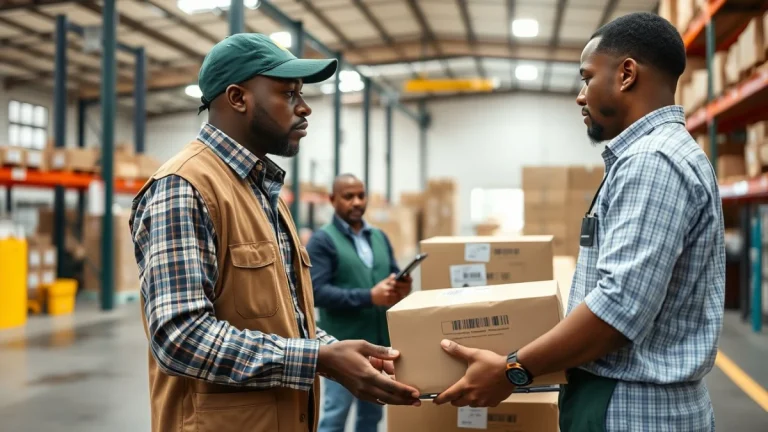
Common Logistics Assistant Interview Questions—and How to Answer Them
If you’re preparing for a logistics assistant interview, knowing the right answers ahead can give you an edge. This article breaks down typical interview questions and provides clear, practical answers to help you succeed. Whether you’re taking a free logistics assistant course with certificate in South Africa or applying for your first logistics role, this guide will help you sound confident and ready.

Many beginners assume logistics interviews focus only on technical knowledge, but a big part is about how you handle real workplace tasks and challenges. You’ll need to explain not just what logistics means, but how you deal with things like busy warehouses, time pressure, and working with a team. One common issue is underestimating how much attention employers pay to your ability to communicate and solve problems on the job. For example, logistics assistants often find themselves juggling multiple shipment schedules on short notice—showing you are flexible and calm is just as important as knowing inventory terms.
What Interviewers Really Want to Know
Understanding this helps you tailor your answers:
- Knowledge of logistics basics: Do you understand supply chain flow, warehousing, transportation, and documentation?
- Practical skills: Can you manage inventory, use logistics software, and handle safety procedures?
- Problem solving and communication: How do you deal with delays, mistakes, or customer queries?
- Workplace readiness: Are you aware of health & safety, teamwork, and professional behaviour?
Sample Logistics Assistant Interview Questions with Strong Answers
1. Can you explain what logistics is and why it matters to businesses?
Strong answer: Logistics is about moving goods and managing inventories efficiently from the supplier to the customer. It ensures products arrive on time and in good condition, which saves costs and keeps customers happy. In South Africa, where transportation routes can vary greatly, good logistics helps businesses adapt and compete.
2. What are the key duties of a logistics assistant in a warehouse?
Strong answer: My duties include tracking stock levels, helping with stocktaking, updating inventory systems, coordinating shipments, handling delivery documentation, and ensuring goods are stored safely. I also communicate with drivers and suppliers to keep shipments on schedule and report any issues immediately.
3. How do you handle an inventory discrepancy during stocktaking?
Strong answer: First, I would recount the stock to confirm the discrepancy. Then, I’d check records for recent movements or errors in data entry. If it’s due to damage or theft, I report it according to company procedures. Keeping accurate records and regularly updating the inventory system helps reduce such mistakes.
4. Describe a time when you had to prioritise tasks under pressure.
Strong answer: In a previous role, multiple shipments arrived at once. I prioritised urgent deliveries first, communicated with the team to divide tasks, and updated the system accordingly. This approach helped us avoid delays and kept the distribution centre running smoothly.
5. What safety measures do you follow when handling goods?
Strong answer: I follow all workplace safety rules, including wearing the correct protective gear, lifting goods safely, and storing items correctly to prevent accidents. I’m also careful when handling hazardous materials, always following protocols and reporting any unsafe conditions immediately.
Step-by-Step Guide to Prepare Your Logistics Assistant Interview
- Review the core logistics concepts: Study supply chain basics, warehousing, transportation, and documentation from credible courses or guides.
- Practice skill-based questions: Think about how you would describe inventory control, shipment tracking, and workplace safety.
- Prepare specific examples: Recall real or simulated situations where you solved a problem, worked well in a team, or handled pressure.
- Understand the South African logistics context: Be ready to mention how local road conditions, port traffic, or customs can affect logistics.
- Practice communication: Clear, brief, honest answers make a big difference during interviews.
Common Mistakes to Avoid in Your Answers
- Being too vague: Avoid broad statements like “I’m a hard worker” without examples that show it.
- Ignoring technology: Don’t skip mentioning your familiarity with logistics software or basic digital tools, even at an entry level.
- Overlooking safety: Many beginners underestimate how important health and safety knowledge is for logistics roles.
- Failing to relate to South African logistics: Employers appreciate answers that show you understand local challenges.
- Not being honest about weaknesses: It’s better to admit something you’re improving on than to bluff.
Customising Your Answers for Different Employers
Each company will have slightly different priorities. A busy warehouse in Johannesburg might expect you to stress stock accuracy and fast turnover. A transport company in Cape Town might focus on tracking and coordinating deliveries. If you know the company’s niche, tailor your stories and examples to fit their operations.
Extra Tips to Nail Your Interview
- Bring a hard copy of your CV and certificate from a free logistics assistant training with certificate course.
- Dress neatly, matching the workplace culture—logistics jobs usually call for practical, tidy clothes.
- Ask thoughtful questions about their logistics system or team to show you’re interested and prepared.
- Practice answering questions aloud to reduce nerves and sharpen your phrasing.
What Do Beginners Usually Get Wrong?
Many new candidates focus only on learning logistics terms and neglect problem solving or teamwork questions. Employers often cast out answers that sound textbook without showing how you handle real situations on the floor. Also, some forget to mention their basic computer skills, which is a red flag since digital tools are everywhere in logistics.