Quick Answer
To perform CPR for beginners, first check the scene is safe, assess if the person is unresponsive and not breathing normally, call emergency services, then start chest compressions at the right depth and pace. If trained, add rescue breaths after every 30 compressions. Learning these skills through a free first aid course with a certificate in South Africa helps you act fast and confidently during emergencies.
If you’re new to CPR, it can feel overwhelming to know exactly what to do in a real emergency. But having a clear, easy-to-follow process helps you stay calm and provide the right care until help arrives. CPR can save lives in workplaces, homes, or public areas around South Africa, so it’s useful for anyone to learn the basics.
What is CPR and Why It Matters
CPR, or cardiopulmonary resuscitation, combines chest compressions and rescue breaths to keep oxygen moving through a person’s brain and organs when their heart stops beating properly. This is vital during cardiac arrest or when someone stops breathing.
Acting quickly with CPR can significantly improve someone’s chance of survival. Even if you’re not a medical professional, knowing these core steps allows you to provide crucial help. Learning CPR is especially important in South African workplaces where emergency medical services may take a few minutes to arrive.
Step 1: Check the Scene and Person
Before doing anything, make sure the place is safe for you and the person. Look out for dangers like traffic, fire, or electrical wires. If the scene is risky, don’t put yourself in danger; call for help from others or wait for professionals.
Next, check if the person responds by gently tapping their shoulder and speaking loudly, for example, “Are you okay?”. If they don’t respond and aren’t breathing normally (no breathing or only gasping), call emergency services immediately. If you can, ask someone else to call so you can start helping right away.
Step 2: Position the Person and Open Airway
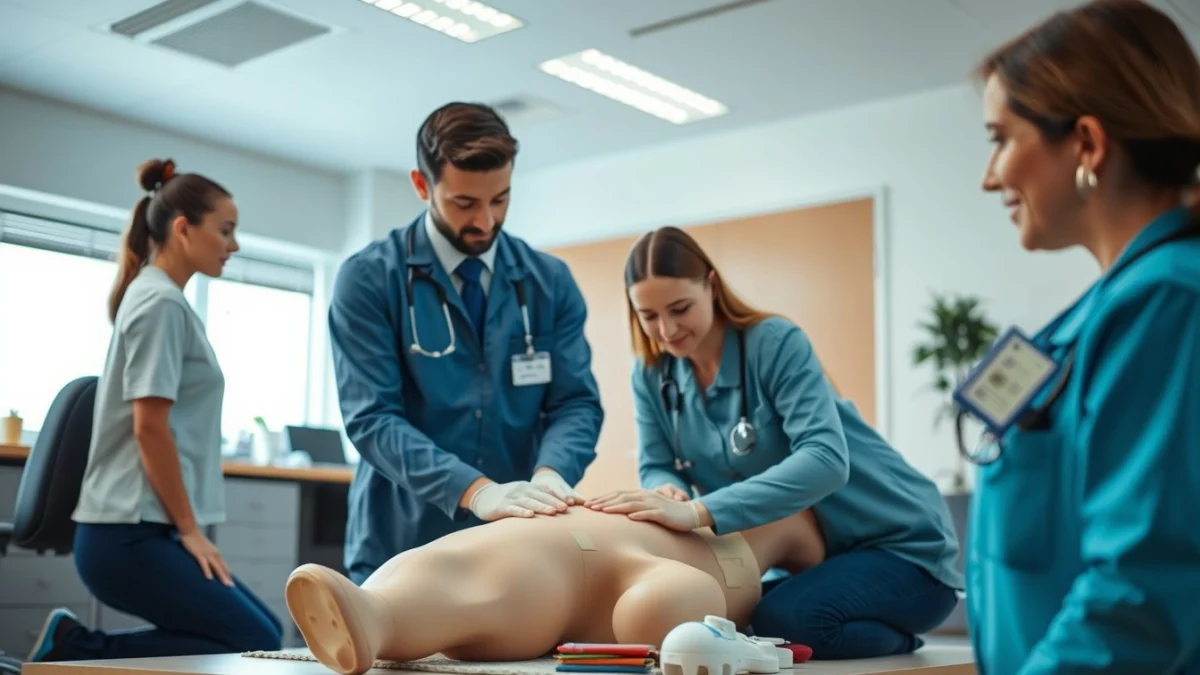
Lay the person flat on their back on a firm surface like the floor. Kneel beside their chest, placing yourself so your shoulders are directly above your hands when you start compressions—this helps you push straight down.
To prepare for rescue breaths, tilt their head back slightly by lifting the chin with one hand and pushing the forehead back with the other to open the airway. This helps air reach the lungs when you breathe into their mouth.
Step 3: Chest Compressions
Place the heel of one hand in the centre of the chest, between the nipples. Put your other hand on top and interlock your fingers. Keep your arms straight and your shoulders above your hands to use your body weight when pressing down.
Push hard and fast – aim for at least 5 cm deep and compress at a rate of 100 to 120 times per minute. A good way to keep rhythm is to push along with the beat of the song “Stayin’ Alive” by the Bee Gees. Let the chest rise fully between compressions but keep your hands on the chest.
Step 4: Rescue Breaths (If Trained and Confident)
If you have been trained and feel comfortable, after every 30 compressions, give 2 rescue breaths. Pinch the person’s nose shut, make a tight seal with your mouth over theirs, and breathe steadily for about 1 second. Watch their chest rise — if it doesn’t, reposition the head and try again.
If you aren’t trained or are unsure about rescue breaths, keep doing chest compressions only until help arrives.
Common Mistakes to Avoid
- Stopping compressions too soon: continue unless the person starts breathing, help arrives, or you’re too tired.
- Compressing too shallow or too slowly: aim for 5 cm depth and the right speed to keep blood flowing.
- Not calling emergency services straight away: always do this before starting CPR.
- Giving rescue breaths without opening the airway properly or without training.
CPR Checklist for Beginners
- Check that the scene is safe
- Check responsiveness and normal breathing
- Call emergency services
- Lay person flat and open airway
- Perform 30 chest compressions (5-6 cm deep)
- Give 2 rescue breaths if trained
- Repeat until help arrives or person recovers
Take Your First Aid Skills Further
CPR is just one part of first aid but knowing it makes a huge difference. Many South African workplaces require first aid knowledge to handle accidents and emergencies safely. To gain more confidence and learn other lifesaving skills like treating wounds, choking, and burns, sign up for a free online first aid course with a certificate. This course offers practical lessons you can complete at your own pace.
Try the First Aid Certificate Course at EduCourse for easy access to beginner-friendly training that suits anyone wanting to prepare for emergencies.