
Non-verbal Communication in Education
Non-verbal communication in education plays a big role in how teachers, learners, and support workers understand each other. This type of communication happens without words. It includes the way we use our bodies, facial expressions, and even the space around us to share messages. For educational support workers, knowing about non-verbal communication helps to make learning easier and support learners better.
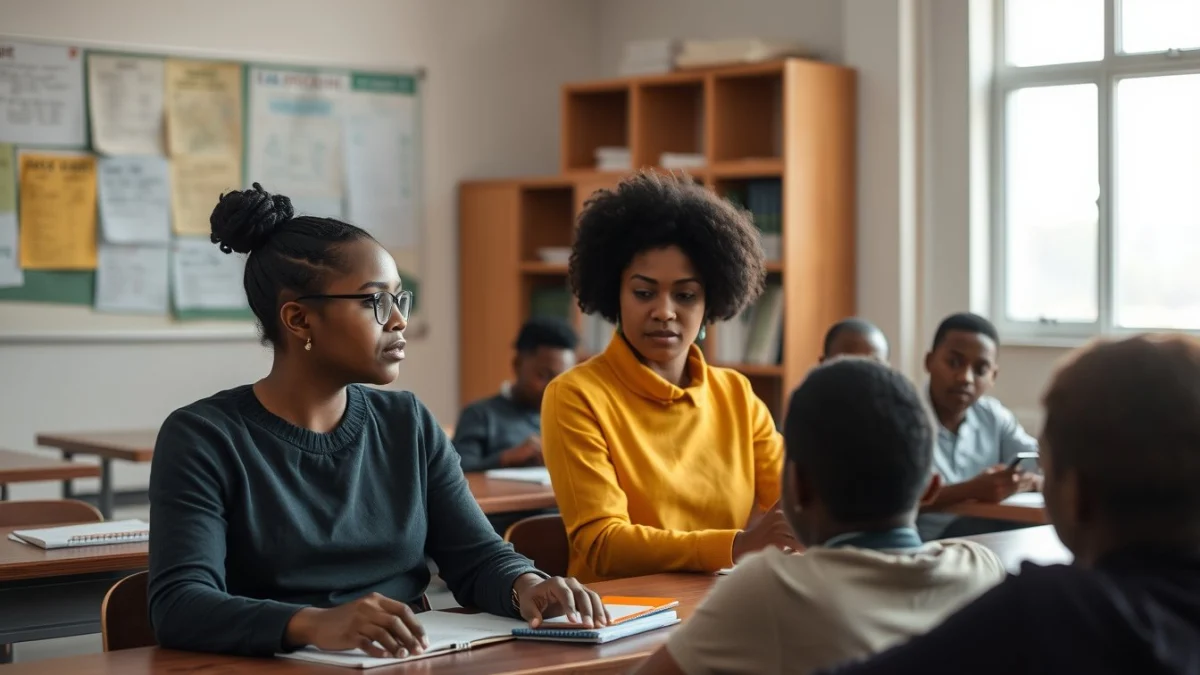
How Non-verbal Communication Helps in the Classroom
In a classroom, non-verbal signals can tell a lot about how learners feel or understand the lesson. For example, a learner who looks confused might be struggling with the task. If a learner avoids eye contact, they might feel shy or nervous. Teachers and support workers pick up on these signs to know when to help.
Sometimes, words aren’t enough. A smile or a nod can encourage learners to keep trying. Standing close to a learner can show that you are ready to help. On the other hand, crossed arms or a frown might make learners feel sad or worried, so it is important to watch how your body language looks.
Examples of Non-verbal Communication in Education
- Facial expressions: Smiling to show encouragement or raising eyebrows to express surprise.
- Gestures: Nodding to agree or waving to get attention.
- Eye contact: Looking at someone while they speak to show you are listening.
- Posture: Sitting upright to show interest or slouching to show boredom.
- Proximity: Standing close to support a learner or giving personal space.
As a support worker, you need to read these signs well and respond in a helpful way. If a learner looks upset, you might gently ask if they need help. If they seem tired, you might suggest a small break. You also use your own non-verbal communication to build trust and show you care.
Non-verbal communication also helps when learners cannot speak well or have difficulty with language. For example, learners who are deaf or hard of hearing often use gestures and facial expressions to communicate. Being aware of these signals improves how you support them during lessons.
Remember, non-verbal communication must match what you say. If you say, “Well done,” but look angry or bored, learners may feel confused. Your body language should support your words for clear communication.
In summary, non-verbal communication in education is a powerful tool. It helps support workers understand how learners feel and what they need without always using words. Careful attention to body language, facial expressions, and gestures makes teaching and learning better for everyone.
Live Scenario • Active Situation
You are an educational support worker in a busy Grade 3 classroom.
There is no single perfect answer. Choose what you would do in this situation.
