
Overview of cashier responsibilities
Key Duties Every Cashier Must Know
An overview of cashier responsibilities shows that a cashier plays an important role in any store or business. They are often the final point of contact with customers. This makes their work essential for good customer service and smooth business operations.
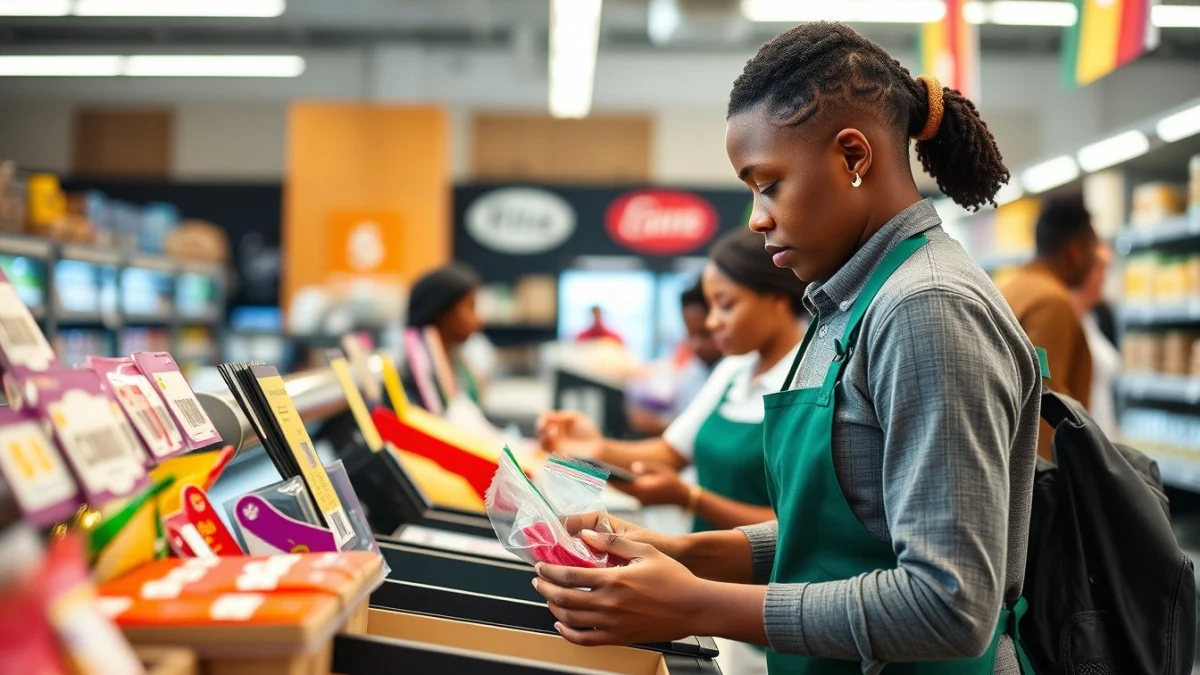
Cashiers mostly handle money and sales transactions. They scan items, process payments, give change and issue receipts. This needs to be done quickly and accurately to avoid mistakes that can cause problems for both the customer and the business.
Besides handling money, cashiers also greet customers and respond to simple questions they might have. They keep the checkout area tidy and organised. This helps customers feel welcome and makes the cashier’s job easier.
Main tasks of a cashier:
- Scan items and total purchases.
- Accept payments by cash, card, or mobile money.
- Give correct change and receipts.
- Answer customers’ questions politely.
- Keep the cash register balanced and report any differences.
- Maintain a clean and organised checkout workspace.
- Follow store policies on returns and refunds.
- Report theft, fraud, or suspicious behaviour to supervisors.
Handling money responsibly is very important. Cashiers must be honest and careful at all times. They should double-check amounts during transactions and when counting the money in their till. This reduces the chance of errors or loss.
Cashiers also need to work well with other staff members. Good teamwork helps when the store is busy, or when problems arise. For example, a cashier might need help from a supervisor to fix a faulty scanner or approve a refund.
In many cases, cashiers use technology like barcode scanners, card machines, and point-of-sale (POS) software. Knowing how to use these tools properly speeds up service and reduces mistakes.
Finally, cashiers contribute to the overall shopping experience. A friendly attitude and fast service help customers feel valued and encourage them to return. This is a big part of why businesses keep cashiers well-trained and motivated.
In summary, the role of a cashier is more than just handling money. It involves customer service, attention to detail, honesty, and teamwork. Understanding the overview of cashier responsibilities helps learners prepare for the job and perform well in a retail environment.
Live Scenario • Active Situation
You are a cashier at a busy local store.
There is no single perfect answer. Choose what you would do in this situation.
