
Effective verbal and non-verbal communication
How to Communicate Well at Events
Effective verbal and non-verbal communication is very important for event and conference assistants. It helps you share ideas clearly and build good relationships with clients, colleagues, and guests. When you communicate well, the event runs smoothly and everyone feels respected and informed.
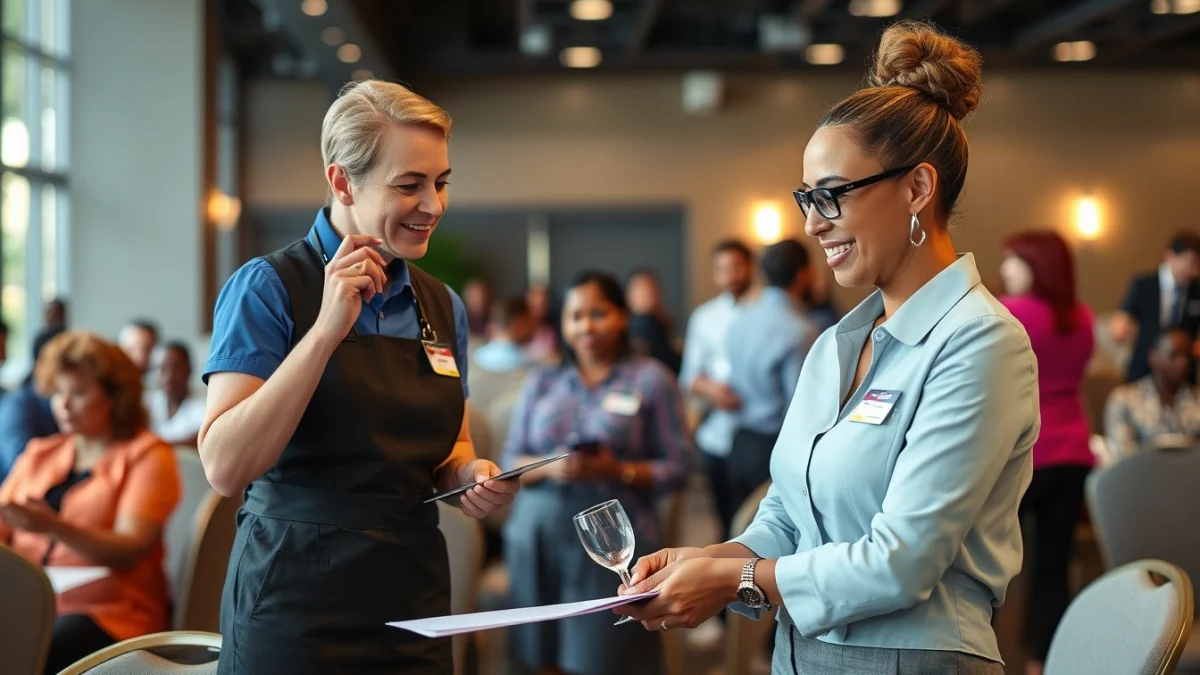
Verbal communication is what you say and how you say it. This includes your choice of words, tone, speed, and volume. Using clear and simple language helps avoid confusion. Speaking politely and confidently makes people trust you. Listening carefully is also part of good verbal communication because it shows you value what others say.
Non-verbal communication involves body language, facial expressions, eye contact, and gestures. It can support or change the meaning of your words. For example, smiling shows friendliness, and making eye contact shows you are paying attention. If you cross your arms or avoid eye contact, people may think you are uncomfortable or uninterested.
At events, you will use both verbal and non-verbal communication all the time. For example, when welcoming guests, your words should be friendly, and your body language should be open and warm. When giving instructions, your tone should be clear and your gestures direct, so people understand easily.
Tips for Effective Communication as an Event Assistant
- Speak clearly and slowly to make sure everyone understands you.
- Use simple words and short sentences.
- Maintain eye contact to show you are engaged.
- Smile and use positive facial expressions.
- Listen actively without interrupting.
- Use gestures to support your message, like pointing or nodding.
- Be aware of your posture – stand straight and look approachable.
- Adapt your communication style depending on the situation and audience.
Remember, effective verbal and non-verbal communication is a skill you can improve with practice. Pay attention to how people respond to you, and adjust your behaviour to make your communication more effective. This will help you become a confident and professional event assistant.
Live Scenario • Active Situation
You are an event assistant managing guest arrivals at a busy conference.
There is no single perfect answer. Choose what you would do in this situation.
