
Use of Barcodes and Scanners
How Barcodes and Scanners Help in Retail Stock Control
The use of barcodes and scanners is very important in retail inventory management. These tools make it easier and faster to control and track stock. A barcode is a small, printed code made up of lines and numbers. Each product in a store has its own unique barcode.
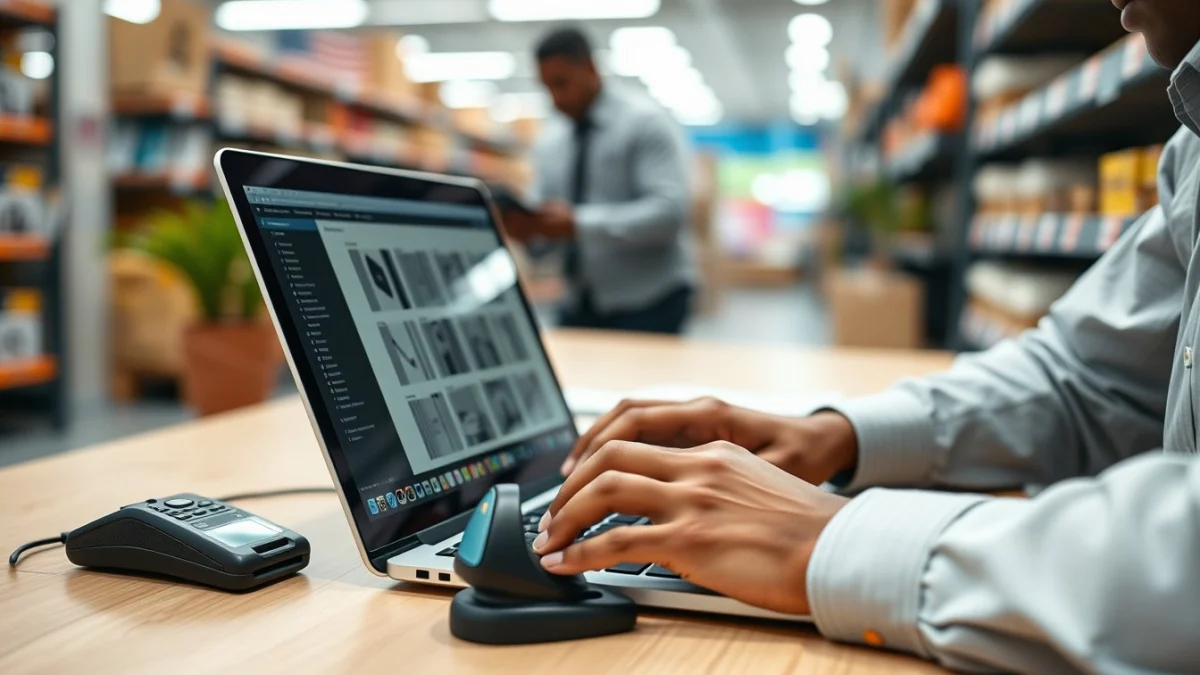
When you sell or receive stock, a barcode scanner reads the barcode on the product. It sends this information to your stock control system automatically. This process removes the need to write down product details by hand, reducing errors and saving time.
Barcodes hold key information such as product name, price, and stock number. As soon as a barcode is scanned, the stock system updates the inventory levels immediately. This helps retail managers keep accurate records without counting items manually.
Main Benefits of Using Barcodes and Scanners
- Speed: Scanning barcodes is much faster than typing product codes or writing down stock numbers.
- Accuracy: Barcode scanners reduce mistakes from human error during data entry.
- Real-time updates: Stock information updates instantly when items are scanned, showing exactly how much stock is available.
- Easy tracking: You can track sales, deliveries, and stock movements clearly.
- Improved reporting: Getting sales reports and stock levels becomes quick and simple.
For example, when goods are delivered, scanning each item updates the stock system to add new stock. When products are sold, scanning at the till reduces stock levels. This continuous stock control helps prevent running out of popular items or having too much of slow-moving products.
Barcodes and scanners are also useful for stocktaking. Instead of counting all products manually, staff can use a scanner to check stock quickly and accurately. The data collected during stocktakes can be used to compare with the computer records and fix any differences.
Using barcodes and scanners creates a more efficient way to manage stock. It saves time, lowers costs, and means fewer mistakes. Retail stores of all sizes can use this system to improve how they manage inventory.
In summary, barcodes and scanners are essential tools in retail stock control and tracking. They speed up stock handling, increase accuracy, and help retailers keep the right amount of stock available for customers. Using these tools well makes it easier to run a successful retail business.
Live Scenario • Active Situation
You are a stock controller at a busy retail store managing incoming deliveries.
There is no single perfect answer. Choose what you would do in this situation.
